

Backyard birdfeeders, along with the right seed, can entice an array of birds. You can attract common backyard favorites, like cardinals and woodpeckers. Or, you might attract more elusive bird species, like the painted bunting.
Backyard birdfeeders provide people with the unique opportunity of watching birds from home. This lets birdwatchers have the chance to observe birds more closely and with more ease. The Cornell Lab of Ornithology notes that feeding birds helps support bird populations.
Learn about the best ways to set up your birdfeeder. Keep reading to find out about the 10 types of birdfeeders and the birds they attract.
Understanding the Diet of Birds
Insects are a common part of most birds’ diets. Some birds, like bluebirds, eat insects almost exclusively. They only switch to fruit and berries if the food supply of insects is running low.
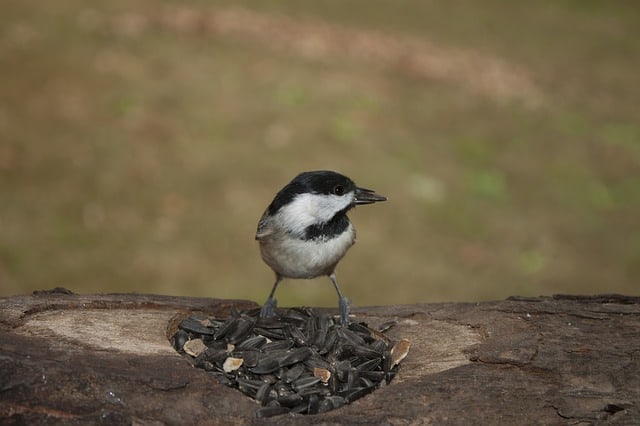
Like many birds, Carolina chickadees love black-oiled sunflower seeds
Other birds, like the Baltimore oriole, eat fruits such as berries, grapes, cherries, and oranges much of the year. During the breeding season, they primarily switch to insects. Some will also drink nectar. Chickadees, orioles, woodpeckers, buntings, and finches will all visit hummingbird feeders to sip sweet sugar water. Omnivorous species eat both seeds and small animals.
As well, there are carnivorous birds. However, these are typically birds of prey. This includes owls, hawks, eagles, kites, falcons, vultures, and osprey. Even the loggerhead shrike, the only truly carnivorous songbird, fits in this category.
Learn more about the loggerhead shrike and other Central Florida songbirds.
Florida birds have diets specific to their needs. They fall into one of the following categories:
Diet | Food | Examples |
Insectivorous | Insects and Invertebrates | Northern Flicker |
Frugivorvous | Fruits and Berries | Cedar Waxwing |
Granivorous | Grains and Seeds | Northern Cardinal |
Carnivorous | Meat (Carrion, Other Birds, Small Animals, Fish, Reptiles) | Red-Shouldered Hawk |
Nectarivorvous | Nectar from Flowers | Ruby-Throated Hummingbird |
Omnivorous | Fruits, Berries, Meat, Insects, Seeds, and Grains | Northern Blue Jay |
It’s important to know the diet of the species of bird you’re trying to attract or are in your area. That way, you can use the right backyard birdfeeders and birdseed accordingly.
Understanding the Diet of Fledglings
Most nestlings of Florida birds are primarily fed a diet consisting of insects—lots of insects. A University of Delaware study revealed that a single brood of baby chickadees ate between 5,000–9,000 insects.
Insects provide protein, fats, and fluids. Nestlings don’t drink water. Instead, they get the fluids they need from the insects and seeds that the adults feed them. Nestlings are fed regurgitated food, their diet varying according to their species.
A few days after hatching, the parents will start feeding the babies whole bits of worms and bugs. After a few more days, they start feeding the nestlings whole worms and large insects, caterpillars, and grubs. Depending on the species, the adults might possibly add seeds, grains, fruits, and berries, too. The American goldfinch is the only exception to this. They only feed their nestlings regurgitated seeds with the exception of an occasional accidental insect.
Most fledglings leave the nest two to three weeks after they’ve hatched. Parents still continue to bring food to fledglings and teach them how to find worms and hunt bugs. They eventually teach them the ins and outs of a birdfeeder and suet cage if they are provided in the yard.
General Food Preferences of Birds
There are many birds that permanently call Central Florida home. Others are seasonal visitors, leaving cold and snow for sunshine and a warm climate. Whether they’re residents or snowbirds, Florida birds require a variety of foods in their diet. Such as fruits, nuts, seeds, insects, and bugs. Some birds like chickadees, wrens, and blue jays also enjoy a high-energy treat of suet.
Foods to Avoid When Feeding Birds
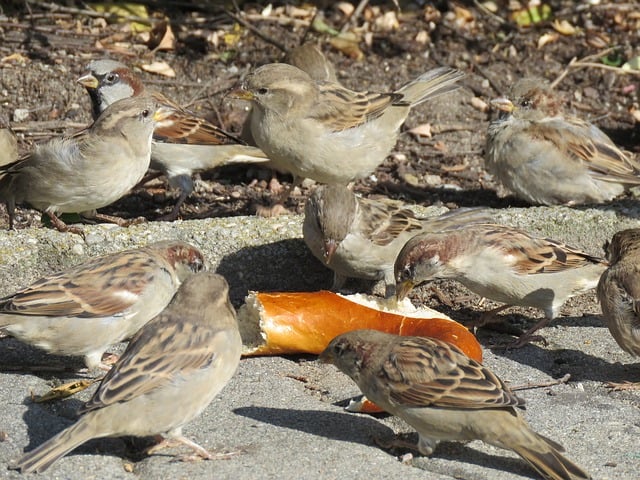
Bread has no nutritional value for birds
We’ve all seen city birds hopping around in parking lots, or on sidewalks snatching up discarded french fries or potato chips lying on the ground. We’ve seen them steal bits of bread, leftover burger, or pizza off of left-behind plates or wrappers on outside tables or benches. They’ve even been seen licking drips of melted ice cream.
A bird’s willingness to eat something doesn’t imply it’s good for its health. In reality, it might be dangerous or even lethal. If a bird eats something toxic, like the onion left on a discarded fast food burger, it can become ill or in some cases die. When we choose to feed birds we should only offer foods that provide them nutritional sustenance. If they fill up on non-nutritional junk food, they may also miss out on looking for healthy food choices that will sustain their diet, like seeds, fruits, and insects.
We have gained much knowledge over the years of what’s suitable to feed birds. Let’s talk about what we shouldn’t feed them.
Foods we shouldn’t feed birds:
- Bread, sweet treats, honey, salted foods, and junk food like potato chips
- Dairy and chocolate
- Certain fruits with pits and seeds, avocados, and pesticide-treated fruits
- Onions, garlic, and wild mushrooms
- Alcohol, xylitol, and caffeine
- Raw meat and eggs
- Desiccated coconut
- Old or moldy birdseed or nectar
- Dried beans and lentils
When Did the Practice of Feeding Birds Begin?
People have fed birds for centuries, since at least the 6th century to be exact. Saint Serf of Fife, a monk, tamed a pigeon by feeding it. Orthodox Hindus during the ancient Vedic period in India practiced the feeding of wild birds. This act was believed to reduce negative karma.
During the 18th century, John James Audubon documented that Europeans provided food to birds.
In the Victorian era, two famous authors, Henry David Thoreau and Emily Dickinson both described in some of their written works the feeding of birds.
In the late 1880s, ornithologist and naturalist Florence Merriam Bailey wrote a beginner’s bird book. This was to pique the general public’s interest in birds and birdwatching. In her book, she writes of a woman named Mrs. E.B. Davenport. She is credited as the first person to feed birds through winter and year-round.
Why Set Up Backyard Birdfeeders
Backyard birdfeeders offer many benefits for you and the birds. They provide an essential supplement to birds’ diets. Especially when natural food sources become scarce, particularly during times of drought. By providing a stable food supply, you can help various species during these times.
As well, feeders are an excellent tool for education. Just from your home window, you can open a new world of learning. Children can learn about the differences between bird species, migratory patterns, behaviors, and more.
How Feeding Impacts and Benefits Bird Populations
Feeding birds contributes to broader conservation efforts. Studies have shown that populations with access to feeders often live longer and have more offspring. This is likely because the supplemental food reduces the amount of foraging they have to do. This would help them save energy, which they can then dedicate to reproduction. As well, feeders help sustain species that are declining.
Backyard birdfeeders also contribute to citizen science projects. These projects monitor population trends and the distribution of birds. This helps researchers gather data on a much broader scale than would be possible otherwise.
Origins and Evolution of Bird Feeders
People have been using bird feeders for centuries. In 1825, a naturalist by the name of John Freeman Milward Dovestan created a hanging birdfeeder. He called it an ornithotrophe. Table feeders were introduced at the end of the 19th century. In the 1900s, people started using window tray feeders. As feeding birds became more popular, more sophisticated feeders started emerging.
In 1910, a German man named Hans Berlepsch made bird feeders that minimized waste. He created a feeder design similar to a cross between a hopper and a tube feeder.
Several million Americans now feed wild birds. Wide varieties of backyard birdfeeders are available today. Many feeders are geared toward specific birds and their preferences.
Balancing Diverse Feeders for a Range of Bird Species
If you want many bird species, it’s important to balance the diverse types of feeders. The process takes some planning. First, understand what types of birds frequent your area. Are they a clinging type, like the American goldfinch? Are they a foraging type, like the northern cardinal? Do they prefer to hang upside down while they eat, like the brown-headed nuthatch? Once you know what kind of birds are in your area, select the feeder and food from there.
Second, understand what time of year migratory birds pass through. Putting up feeders just prior to and during these times increases the chances of one visiting your backyard. Make sure you provide that particular bird’s preferred feeder and food.
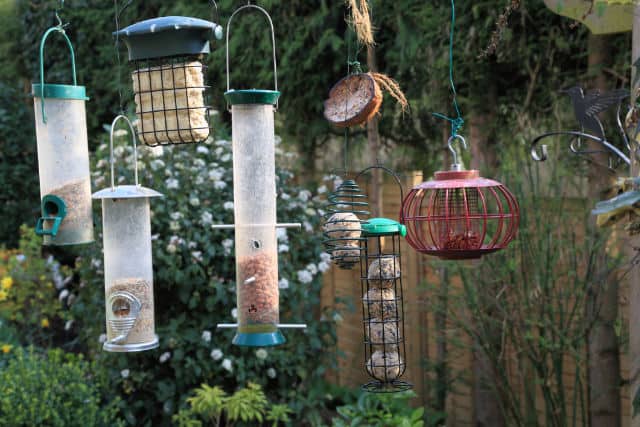
Having a variety of birdfeeder styles in your backyard increases the number of bird species that’ll visit
Let’s say you want to attract Baltimore orioles, for example. From October to April, you should put up oriole feeders with nectar or fruit and jelly feeders. While this does not guarantee that the bird will visit, this makes it more likely that they will. However, keep in mind that some migratory birds will not visit a feeder at all.
Learn how to attract birds to your backyard without a birdfeeder.
Last of all, you should make sure you’re placing feeders in an appropriate place. Many birds won’t come to a feeder if they feel unsafe. Make sure you don’t place the feeders out in the open, where they’re vulnerable to predators. Instead, it’s better to place them 12 feet away from bushes, shrubs, and trees. When hanging a feeder in a tree, make sure it’s 6 feet away from the limbs and trunk.
10 Types of Birdfeeders for Various Bird Species
Generally speaking, backyard birdfeeders aren’t necessary for wild birds. In Florida, winters are mild. Birds here don’t need to refuel their energy like the ones that live in colder climates. Although migratory and breeding birds appreciate easy high-energy food sources, they don’t require it from us to survive. So it goes without saying that they can care for themselves without our help. At the same time, it doesn’t hurt to provide them with feeders to eat from.
You don’t have to start out with a lot of feeders. Start with one and gradually increase to 5 or more. The more you have, the better your chances are to attract a greater variety of bird species.
1. Tray Feeders
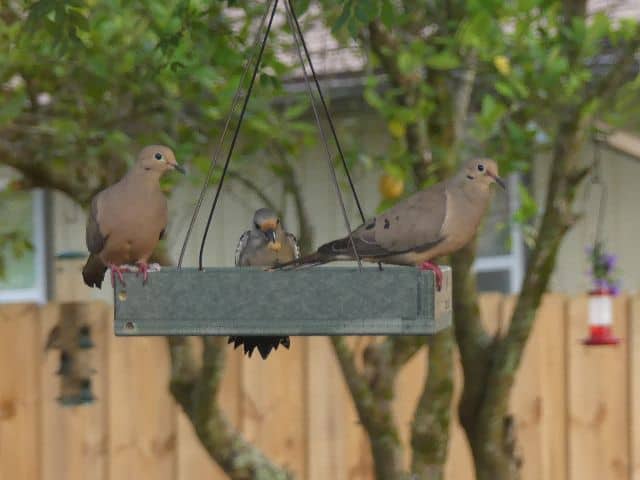
Tray feeders allow a full view of birds while they’re eating, which is great for photo ops
Tray feeders (platform feeders) are flat pieces of wood enclosed all the way around with short edges. This prevents birdseed from falling out. Ideally, the bottom of a tray feeder should have drainage holes or a screen. That way, rainwater doesn’t collect. Some tray feeders come with a roof to keep birdseed dry.
These kinds of feeders sit directly on the ground, are set on a low base, or have short legs. They can also be mounted on a pole, deck railing, fence post, tree, or attached to a window. Tray feeders allow birds to scan their surroundings for predators.
Some of the birds that will use tray feeders include:
- Eurasian collared-doves
- Northern blue jays
- Eastern bluebirds
- Red-winged blackbirds
- Carolina wrens
2. Hopper Feeders
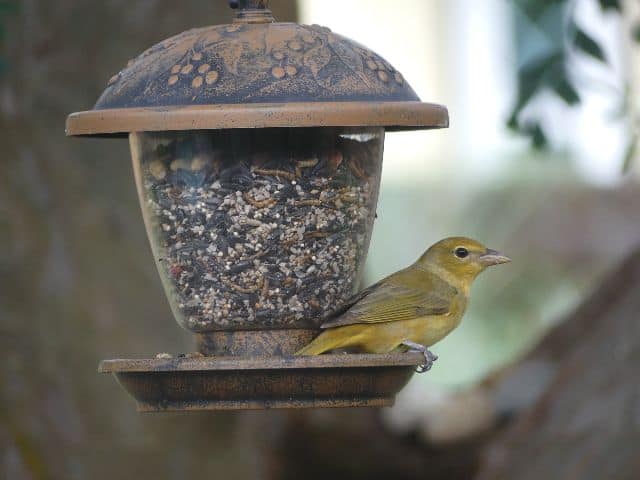
This female summer tanager came in after a storm, enjoying seed from our hopper feeder
Hopper feeders (house feeders) are typically house or cone-shaped seed containers that have a roof and a platform base. This automatic feeder can hold a decent amount of seed for several days without needing to be refilled. One of the most popular feeders in America, hopper feeders are also a good choice for many kinds of birds.
The following is a list of some birds that will use hopper feeders:
- Northern cardinals
- Tufted titmice
- Brown-headed nuthatches
- Painted buntings
- Red-bellied woodpeckers
3. Tube Feeders
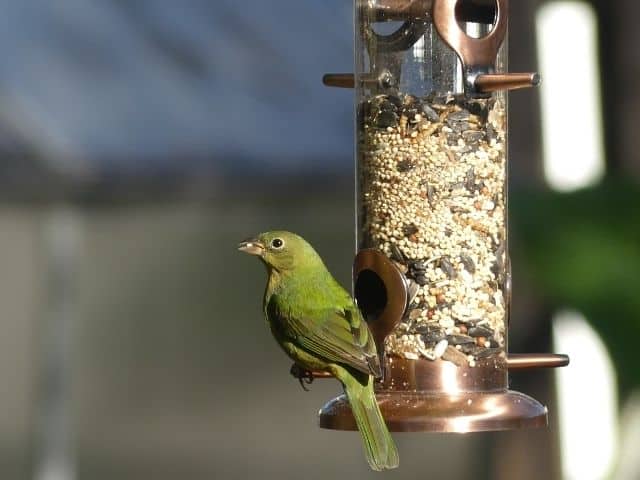
Tube feeders are great for offering small birds perches, like this female painted bunting
Tube feeders are typically plastic tubes with perches and a base. They have a removable cap as well as multiple feeding ports. Like hopper feeders, tube feeders function by using gravity. Tube feeders are excellent for small to medium-sized birds. The design allows them to perch and feed at the same time.
Tube feeders attract smaller birds like these:
- Blue grosbeaks
- House finches
- Chipping sparrows
- Rose-breasted grosbeaks
- Pine warblers
4. Window Feeders
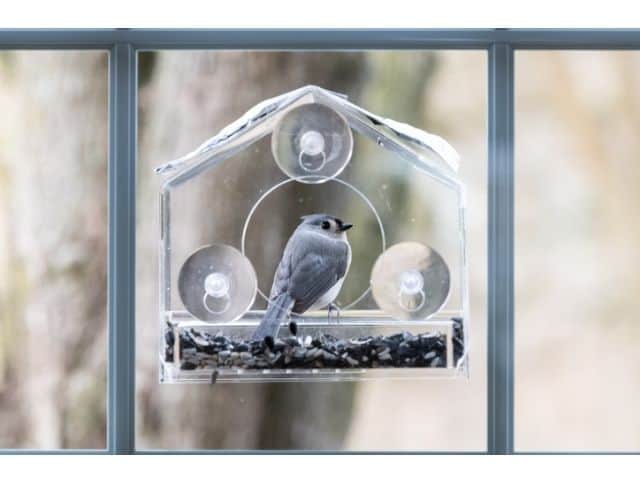
It can take a couple of weeks before birds become comfortable with a new window feeder
Window feeders are attached to a window by suction cups or by windowsill brackets. Large feeders can accommodate the weight and size of most birds. These backyard birdfeeders are popular because they’re affordable and easy to install. There a many different types of window feeders. This includes platform, tube, suet, and hopper styles.
Window feeders are a good design for preventing window strikes
Because this style feeder is so close to your window, you might be worried about bird strikes. Many collisions happen because birds mistake the reflection in the glass of the sky or landscape as being real. Confused birds may attempt flying through the reflection. This can result in serious or fatal injury to the bird.
However, window feeders are actually thought to be one of the best at preventing window strikes. Because the feeder is near the window, birds notice the glass. They also can’t pick up enough speed from the feeder to hit the window hard.
With window feeders, you can observe some of the following birds up close:
- Hairy woodpeckers
- American goldfinches
- Baltimore orioles
- Carolina chickadees
- American robins
Some window feeders come with one or two-way mirrors, allowing you to see the birds without being seen by them. This helps with coaxing smaller or more timid birds to use the feeder.
5. Nyjer Seed Feeders
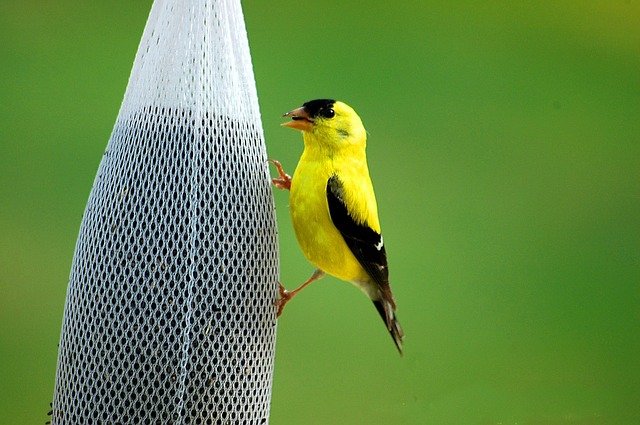
Some small birds enjoy nyjer, including American goldfinches, chickadees, and indigo buntings
Nyjer thistle feeders are an open mesh or a tube that holds nyjer thistle seeds. They’re particularly popular with American goldfinches. These feeders allow small birds to cling directly to the feeder and extract the seed from the small holes.
There are a few style options available when considering nyjer seed feeders. Cloth socks, metal mesh, and tubes are common choices. It’s best to experiment with these styles to see what attracts your local birds.
Squirrels are less likely to bother with sock feeders because they don’t prefer to eat nyjer seed. However, they aren’t above eating it if it’s all that’s available for them. Also, due to their destructive behavior, they often times chew or tear holes nyjer socks regardless.
Florida birds that also enjoy nyjer thistle seed:
- Chipping sparrows
- Song sparrows
- Fox sparrows
- House finches
- Purple finches
6. Oriole and Hummingbird Nectar Feeders
Oriole and hummingbird feeders are identical in function. The color and the measurements of the feeder ports are the key differences between the two. Oriole feeders are orange in color to better attract orioles. Hummingbird feeders are red to attract hummingbirds.
Oriole nectar feeders have larger feeding ports. These ports are specifically designed with the oriole’s larger diameter beak in mind. With that said, the oriole is not deterred by the port size differences. They will happily eat from a hummingbird nectar feeder if it offers a perch.
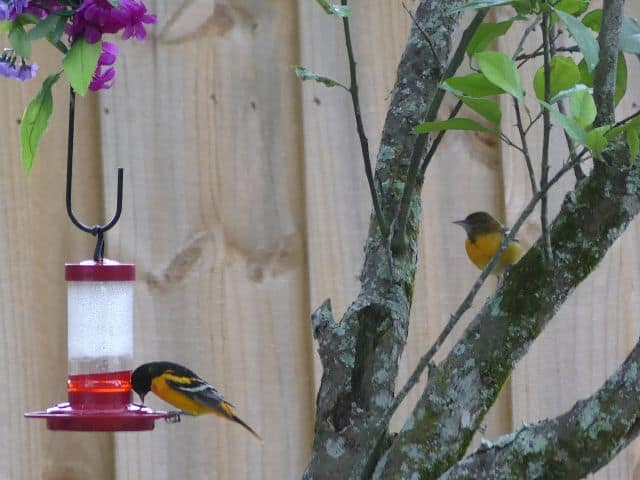
Orioles are notorious for raiding hummingbird feeders
Many hummingbird feeders don’t offer a perch. Hummingbirds will also eat from oriole nectar feeders but have a preference for smaller port holes. Other nectar-eating birds may visit the oriole feeder, too, including summer tanagers, house finches, and some warblers, among others. Oriole feeders can also have fruit spikes to hold orange halves and jelly cups to hold jelly or mealworms.
A few other birds may also be attracted to nectar feeders, including:
- Downy woodpeckers
- Orange-crowned warblers
- Yellow-bellied sapsuckers
- Red-cockaded woodpeckers
- Northern mockingbirds
7. Fruit and Jelly Birdfeeders
Fruit and jelly feeders are for fruit-eating birds. They consist of fruit spikes that can spear fresh fruit halves and jelly cups that can be filled with jelly or berries.
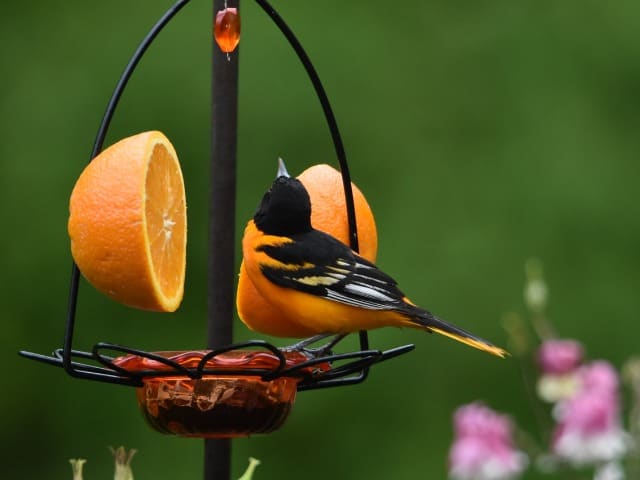
You may attract some bird species to your backyard by offering fruit, jelly, nectar, and mealworms
Jelly cups can be filled with small berries, orange marmalade, or different flavored jellies. For example grape, raspberry, and blackberry. Dark grape jelly in particular is a popular choice and attracts an array of birds. However, dog owners should be cautious when providing grape jelly. In some dogs, consumption may cause severe kidney failure.
Fruit spikes can hold oranges, apples, or pear halves. They can also be used to skewer strawberries, bananas, or plums. Be sure to remove seeds and pits from apples, pears, and plums before offering them to your backyard birds. They should not eat the pits and seeds due to their toxicity.
Some bird species that enjoy sweet fruits and jellies include:
- Orchard orioles
- Summer tanagers
- Ruby-crowned kinglets
- Cedar waxwings
- Spot-breasted orioles
8. Meal Worm Feeders
Mealworm feeders hold dry-roasted, freeze-dried, or live mealworms. These make an excellent high-protein snack that most insect-eating birds enjoy. Live mealworms are more appealing to most birds. Dried mealworms are more economical and easier to store. Either is a favorite among bluebirds. During the breeding season, females and growing fledglings receive extra beneficial protein from mealworms.
Add calcium carbonate to mealworms to increase calcium levels for birds
While mealworms are suitable to put out all year long, they should be considered a treat, not a staple food. They should be given in small quantities. This is because they deplete calcium, which is crucial for bone development and eggshell formation in breeding birds.
Calcium deficiency in birds can lead to severe health problems. It can cause metabolic bone disease, which causes weakened, brittle bones. Breeding females can suffer from egg-binding. This life-threatening condition means they can’t pass their eggs due to insufficient calcium for muscle contractions. This is exhausting for the mother bird, to the point that she could die.
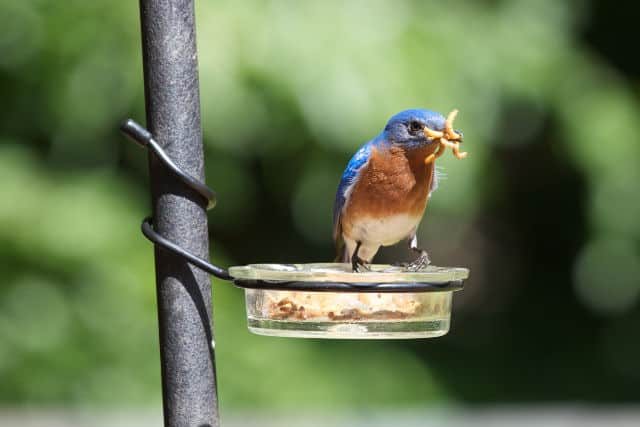
Interestingly, although they might look like worms, mealworms are actually Tenebrio larvae
The easiest way to replace the lost calcium is to add it back by using calcium carbonate powder. Store the powder in an old spice bottle and simply add a few shakes of calcium carbonate to the mealworms and gently mix to coat them. This should be enough to keep birds’ calcium in check.
There are two types of mealworm feeders—dish style and bluebird feeder style. The dish style is shallow, small, and bowl-like, and can be suspended in a tree or suctioned to your window. These feeders can be open or have a roof, which can prevent larger nuisance birds from getting access.
The bluebird feeder style is designed for bluebirds, although smaller birds may use it too. It looks like a house feeder but has plastic or plexiglass windows and entrance holes on each side of it. This design is meant to keep large nuisance birds out as well.
Here are a few birds that might visit your mealworm feeder:
- Prothonotary warblers
- Brown thrashers
- Indigo buntings
- Great-crested flycatchers
- Eastern phoebes
9. Peanut Feeders
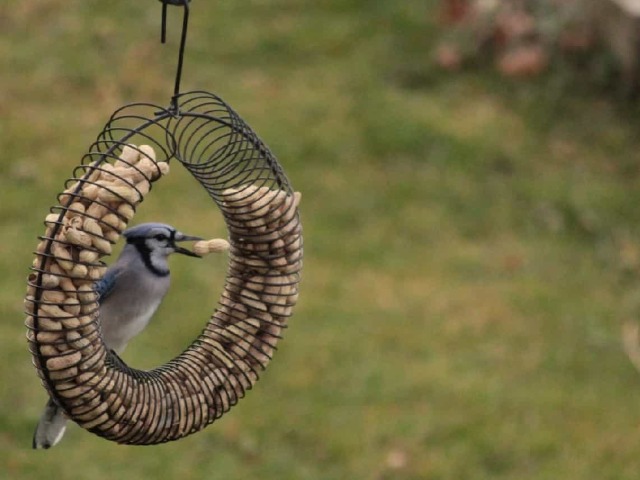
Blue jays love peanuts in the shell, which are a great energy source for them
Peanut feeders are a great way to offer birds another high-energy treat rich in protein, fat, and calories. Many species enjoy them. There are two popular types of peanut feeders. The wreath style, which holds suet balls or whole peanuts, and the tube or round style, which can hold shelled peanuts.
Smaller birds, like the Carolina chickadee, enjoy shelled peanuts and peanut hearts (broken bits of peanuts). Bluebirds in particular can sometimes be persuaded to eat small peanut hearts.
Large birds, like the northern blue jay, enjoy both un-shelled and shelled peanuts. It’s not unusual for blue jays to carry away multiple peanuts in their gular pouch. This is a stretchy throat pouch just under the tongue that stores food. They can carry as many as five peanuts at a time. They’ll cache their peanuts in hidden nooks and crannies to store them for future use.
Check out more interesting fact about songbirds.
Multiple Central Florida birds enjoy eating from peanut feeders such as:
- Northern flickers
- Eastern towhees
- Northern cardinals
- Tufted titmice
- Pileated woodpeckers
10. Suet Feeders
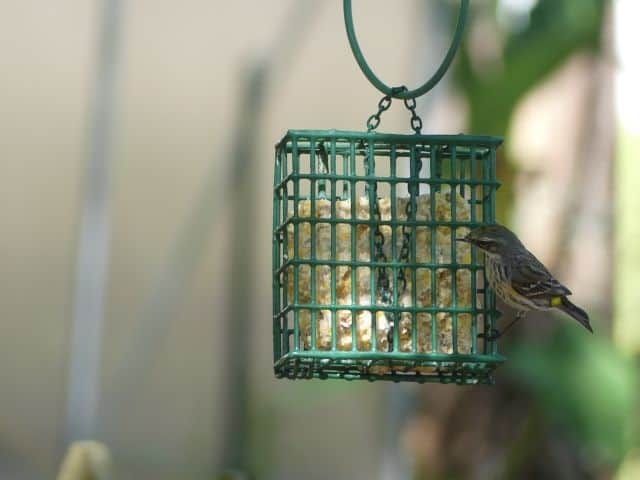
This myrtle yellow-rumped warbler is a common seasonal visitor of our suet feeder
Suet feeders are often simple wire cages that are coated in plastic. They can be square or tube-shaped. They enclose suet cakes, balls, or nuggets. There are also several more intricate style options available. These are different from traditional suet cages.
Options for suet feeders include:
- Square wire cage
- Suet logs
- Cylinder feeders
- DIY mesh bags
- Platfrom feeders
- Suet wreaths
While suet has become synonymous with any fatty treat for a bird, that’s not exactly correct. True suet is raw hard bits of fat from the loins, kidneys, and other organs in beef or mutton. It’s the ideal food for migrating, mating, and nesting Florida birds that require extra energy.
As well, there are several flavors of suet. Flavors include plain, seed-infused, nutty, fruit-infused, insect-infused, and red hot pepper-infused. Remember that not all birds will be attracted to all flavors. The best way to determine what your local birds prefer is through experimentation.
When choosing a flavor, however, be cautious. Some flavors contain ingredients dangerous to dogs. For example, pepper-infused suet contains red hot pepper, which could cause stomach upset. Some fruit-infused suet contains raisins, which can be dangerous and even fatal to dogs when consumed. If you’re a dog owner, always select pet-safe options. Also, keep suet out of your dog’s reach because it could cause stomach upset or pancreatitis if they eat it.
How to Safely Use Suet for Birds
Greasy fat from suet and suet-like food can be a problem for birds if it gets on their feet or feathers. Birds groom themselves with their feet and bills. Even small amounts of fat or grease on their feet can be spread throughout the feathers as they preen themselves.
The grease can mat and misalign the barbs on the feathers, affecting their water repellency. When this happens, they spend all of their time preening their feathers to try and clean them instead of eating and drinking.
Not only can the birds starve to death, but they in turn can spread the melted suet fat and grease to their eggs. The eggs can absorb the fat, which results in the death of the embryo. If an adult spreads greasy fat to a nestling, it will coat the nestling’s wings too.
To counter this, you can buy premade no-melt suet cakes. These won’t melt in the hot Florida temperatures like other suet. You can even make your own no-melt suet.
Another danger to birds that suet cakes present is that they can become rancid or spoiled. Most birds won’t eat spoiled suet, but, occasionally, some will. This can make the birds sick.
In humid and rainy weather suet cakes can grow mold and fungus, and harbor bacteria. Monitor your suet and suet feeders regularly and clean the suet cages thoroughly every couple of weeks. Throw away any spoiled or moldy suet cakes and fill clean suet cages with new suet.
Rancid suet may also attract pests, which include raccoons, rats, mice, and possums. As well, many of these animals are also bird predators.
A variety of birds eat suet, including:
- Yellow-throated warblers
- Pine warblers
- Red-headed woodpeckers
- Gray catbirds
- Scarlet tanagers
There is nothing wrong with providing wild birds with suet as long as it’s done with their safety in mind. You are responsible for providing safe suet that doesn’t expose them to mold, disease, and death.
Learn how to clean suet cages and birdfeeders.
Best Wild Bird Seed Mix
You have a wide choice of birdseed available to you in many different brands and varieties. You might be confused as to which seeds are the best. If you think the best mix is the cheapest, you may want to reconsider. Typically, prices reflect quality. However, even expensive brands of wild bird seed mixes can be guilty of using low-quality fillers.
Bird seed mixes with several types of seeds likely contain a significant amount of low-value filler seed. Companies use filler seeds to add weight and take up space in the birdseed bag. This makes it look like it’s a good bargain for the price. It is not typically a value.
Although not a complete loss, as some ground feeders love these seeds, many birds won’t eat filler seeds. They’re often left to grow mold or are discarded on the ground to sprout.
Be wary of these overused low-quality fillers in many bargain birdseed mixes:
- Golden millet
- Red millet
- Oats
- Wheat
- Red milo
- Flaxseed
- Rapeseed
- Cracked corn
- Canary seed
Look for wild bird seed mixes that don’t list the majority of ingredients as low-value fillers.
Central Florida Weather’s Birdseed Mix Recipe
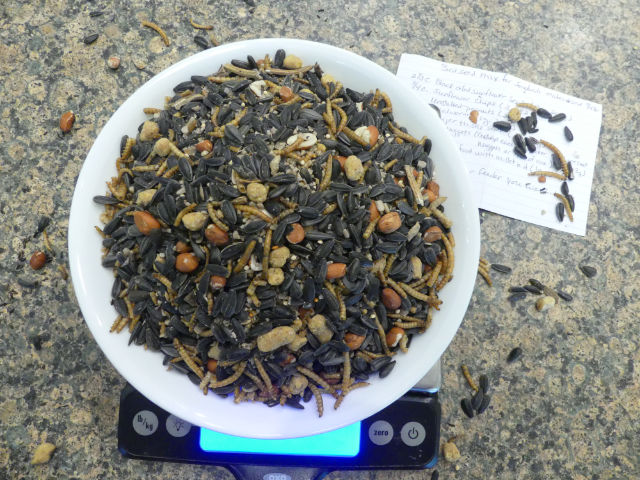
Our DIY birdseed mix includes bird favorites, like mealworms, suet nuggets, and peanuts
Central Florida Weather has been feeding backyard birds for several years. Despite the abundance of low-quality birdseed, a handful of brands are big hits. Brands such as Pennington, Kaytee, and Audubon have garnered favorable feedback.
One of our personal favorites was Harvest Seed & Supply. This brand was always well-received by our backyard birds. Regrettably, this brand had become hard for us to acquire.
We’ve since created our own blend of homemade birdseed mix. While this might not be the cheapest option, you do have control over what goes into it.
Central Florida Weather’s Homemade Birdseed Mix (makes ~ one pound of birdseed mix):
- ¼ cup dried mealworms
- 2 shakes of calcium carbonate powder stored in an old shaker-type spice jar
- 2 ⅓ cups of black-oiled sunflower seeds
- ¾ cup hulled sunflower chips
- ¼ cup unsalted peanuts
- ¼ cup Nyjer thistle seeds
- ⅛ cup woodpecker suet nuggets
- ⅛ cup mealworm suet nuggets
- ⅛ cup wild finch food with millet in it
- 1/4 cup dried fruit (optional)
- 1/8 cup raw unsalted pumpkin seeds (optional)
In a large bowl place ⅛ cup of dried mealworms. Dust the dried mealworms with a couple of shakes of your calcium carbonate powder. Toss gently to lightly coat the mealworms. Add in the remaining ingredients and mix well. You can now distribute the birdseed mix into your backyard birdfeeders. Store any of the unused seed mix in a cool, dry area in an airtight container or ziplock bag.
There’s an advantage to creating you own DIY bird seed mix. This way, you control what goes into the birdseed and can customize ingredients to better fit the birds you want to attract. In the end, you aren’t paying for ingredients you know your birds won’t eat.
The Bottom Line
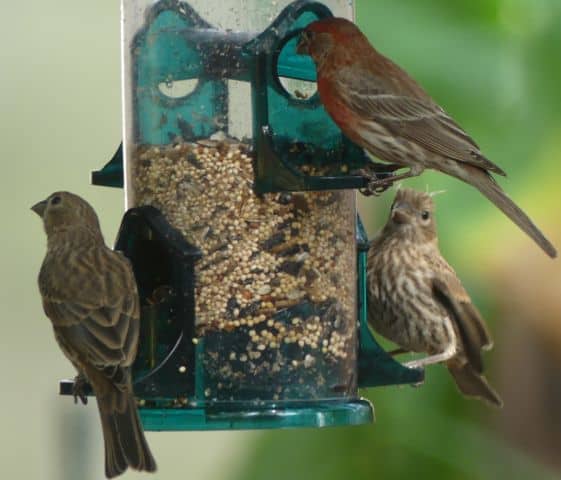
A good quality birdseed mix should bring many birds, like this family of house finches
Putting up backyard birdfeeders is one of the easiest ways to connect with nature. Watching birds come to your yard is both an educational and enjoyable pastime. While they don’t need to be supplemented with food, it still doesn’t hurt to set it out for them.
However, as you now know, it’s not as simple as just putting out some birdseed and waiting for birds to come. You have to use the right seed and feeder if you want to attract a specific species. It’s essential to clean bird feeders, too, to prevent birds from spreading disease and sickness to each other.
Which bird feeder styles are the most popular with the birds in your backyard?