

Attracting birds to your backyard invites the beauty of nature into your daily life. Birdwatchers and birders alike can enjoy the exciting world of bird attraction. It’s fun and educational for both children and adults.
Creating a bird-friendly space is the first step to drawing birds to your backyard. According to the Cornell Lab of Ornithology, you should provide diverse food sources. This will attract numerous bird species. The ideal landscape provides:
- Native plants
- Fresh water sources
- Suitable nesting sites
Implementing these resources will make any backyard more appealing.
This guide offers valuable insights, expert tips, and practical techniques. Learn how to enhance your backyard to entice an array of bird species.
Crafting the Ideal Bird Landscape
The ideal bird landscape provides a thriving habitat. One that meets the needs of birds throughout the year. Native plants offer birds food sources—berries, seeds, and nectar. Trees and shrubs also provide suitable nesting sites and shelter from predators. A well-planned landscape mimics natural habitats.
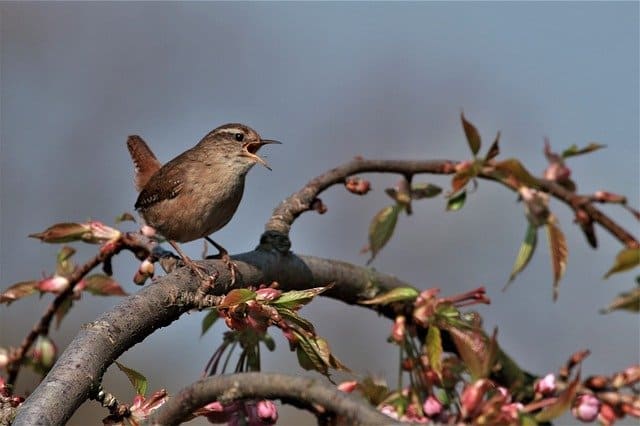
Incorporating plants, trees, and shrubs into the landscape of your backyard may entice birds to visit
You should also incorporate water sources. Birdbaths or small ponds ensure birds have access to clean drinking water. They also provide opportunities for bathing and drinking.
When attracting birds to your backyard, you may want an up-close view of the bird that’s visiting. Picking out the right binoculars can be tricky. Especially when it comes to the complex terminology.
Learn how to choose binoculars with our comprehensive guide. *link when you have completed Choosing Binoculars article
The Role of Natural Habitats
Forests, meadows, and wetlands are familiar environments for birds. These natural habitats offer a variety of native plants. They encourage diverse insect populations and suitable nesting sites. This is why you should incorporate the elements of natural habitats in your backyard as much as possible. Having various bird-friendly plants in your backyard imitates these habitats.
Not only does this add to your bird haven, but you’re also creating a mini-ecosystem. This helps enhance the overall biodiversity of your yard.
Having diverse landscape features offer many benefits to birds, creating an attractive habitat
Types of Plants that Attract Birds
Cultivate native plants to mimic an attractive natural landscape. A natural habitat provides birds with necessary food sources, shelter, and nesting sites. This helps support their overall well-being.
Trees, such as live oak and slash pine, offer perching and nesting areas. Dense shrubs, like saw palmetto, Simpson’s stopper, and beautyberry, produce vibrant berries. These attract fruit-eating birds. Flowering plants like blanket flower, tickseed, and wild petunia can provide food for nectar-feeding species. This makes these plants valuable additions to a bird-friendly garden.
Birds also enjoy the berries of poison ivy, Virginia creepers, holly winterberry, and mistletoe. While these plants are attractive, they’re invasive and poisonous. Plants like sago palm or elderberry can be deadly if consumed by children or pets. There are plenty of other safer selections available. Make sure to always research the plant you’re considering.
The Benefits of Diverse Landscape Features
A variety of vegetation, such as trees, shrubs, and flowers, creates a rich food source. Different plants produce fruits, seeds, or nectar at various times of the year. This ensures a continuous and varied food supply throughout the seasons.
A diverse landscape also provides an array of nesting and shelter options. Trees with cavities, dense shrubs, and tall grasses offer suitable sites for birds to build their nests and raise their young.
As well, varied landscapes attract multiple types of insects, a crucial food source for many birds. This is especially true when it’s breeding season.
Diverse landscape features offer numerous benefits to birds:
- Various food sources
- Nesting and shelter options
- Attracts a greater diversity of insects
These features create a more resilient and attractive habitat. This will support a greater variety of birds in your backyard.
The Role of Birdbaths in Attracting Birds to Your Backyard
Birdbaths are a fantastic way to encourage thirsty and preening birds. Birds get most of their fluids from the insects they eat. However, they still have to drink at least twice daily. Because of this, they’ll appreciate having easy access to water. However, drinking is not their only need. They also bathe in water. They need to do this to rid their feathers of parasites and viruses.
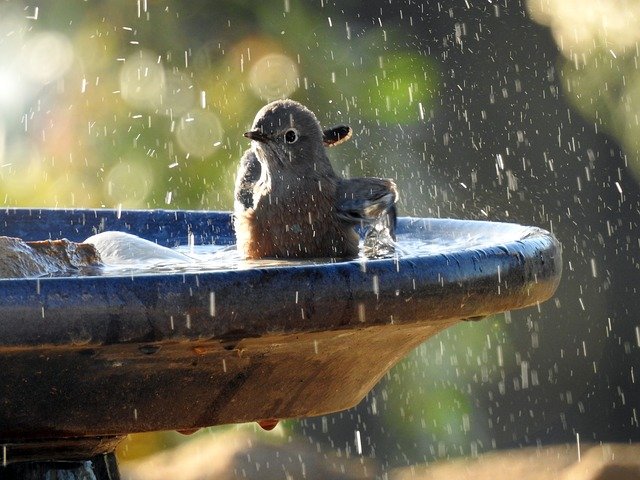
Birdbaths are great for birds that want a cool splash on a hot summer day
Birds visit baths frequently when water sources are hard to find. This is especially true during hot Florida summers and dry winters.
Different Types of Birdbaths
Birds will appreciate the addition of a birdbath. As a result, they’ll become repeat backyard visitors. Bird baths come in a variety of styles. The birds you attract will depend on what style you choose.
Pros and cons of various bird bath types and the birds they attract:
Birdbath Type | Pros | Cons | Birds Attracted |
Pedestal Birdbaths | Provides a view advantage of the surrounding area. | May be too deep and slippery. Can be knoocked ovr by strong winds. Heavy to move easily. | Carolina chickadees, American goldfinches, Carolina wrens, ruby-crowned kinglets, vireos, hummingbirds |
Hanging Birdbaths | Can be placed at better-viewing heights. Less likely to attract predators. Can be hung on a sturdy shepherd hook. | Sways in wind windy weather. Can be unstable and unbalanced when birds use it. Can be difficult to clean and fill. | Eastern bluebirds, northern cardinals, orioles, house finches, tufted titmouses |
Ground Birdbaths | Provide a more natural setting for a wider variety of birds. | Dogs and cat can drink from them, posing a risk of diseases. | American robins, thrushes, brown thrashers, eastern towhees, cedar waxwings, American crows |
Mounted Birdbaths | Easy to clean and fill. Allows for up-close observation. Suitable for limited spaces. | Basin can blow over in high winds if not attached. Bird droppings can make a mess on deck and railings. | Northern cardinals, American robins, notherns blue jays, eastern bluebirds, American goldfinches, Carolina chickadees, tufted titmouses |
Tiered Birdbaths | Provides different levels for birds of various sizes to drink and bathe. Can be quite decorative, enhancing the visual appeal of your yard. | Can be heavier due to the extra tiers, making it harder to move and clean. It might also require more water to fill. | Finches, American robins, sparrows, blue jays, warblers |
Cascade Birdbaths | Adds a dynamic element to your backyard with flowing water, which can attract more birds. The water motion helps to keep the water clean. | Might require a power source to run the water pump, making placement more limited. The constant water flow can also lead to quicker water loss due to evaporation and spillage. | Finches, northern cardinals, eastern bluebirds |
Wall-mounted Birdbaths | Saves on ground space and is often less accessible to predators. It can also be positioned at a convenient height for bird watching. | Limited in size, so may not accommodate larger bird species. Depending on the wall, it can be harder to install and may require drilling. | Carolina chickadees, tufted titmice, hummingbirds, warblers |
Birdbaths also come in a variety of materials, such as glazed ceramic, resin, and terracotta, to mention just a few. Each has its advantages and disadvantages. Some materials like plastic, glazed ceramic, and metal are smooth and easy to clean. Other materials, like concrete, are porous and more challenging to keep clean.
Cleaning a concrete bird bath is a breeze when following Central Florida Weather’s 7 step guide.
Ensuring Bird Safety: Preventing Drowning in Birdbaths
While birds like to bathe and play in birdbaths, most are weak swimmers. It’s very easy for them to become disoriented and struggle to get out until they eventually lose energy. As a result, sometimes, they drown. Young, ill, small, or injured birds are particularly vulnerable. It’s important to take certain measures to provide safe conditions for them.
Birds don’t need a lot of water to drink, bathe, or play in. 1-2 inches is plenty deep for birds to wade, frolic, and cool off in. Reminiscent of natural shallow rain puddles that collect after a summer shower, the depth of a bird bath should be no more than 2 inches in the center. This allows birds of various sizes to stand well above the water comfortably. As well, it ensures they can easily escape from predators when needed.
Birds with nothing to perch on or grip are at risk of slipping into the water. That’s why you should place a few large, textured flat stones or pebbles inside the basin to provide better footing. You can also try to lay a few sticks across the basin. This will allow the birds to rest while preening and drying their feathers after bathing and a place to perch while hanging around the basin. The stones should be positioned so they are safe and steady to allow easy access to the water.
Sloped and slick edges are an added danger. Birds can easily slip or fall into the water and then exhaust themselves trying to get out. Make sure your basin is textured and has sloped edges to assist with footing. This allows birds to easily access and exit the basin, reducing the risk of birds slipping or becoming trapped in the water.
Make Your Birdbath Appealing to Birds
Birdbath bubblers, drippers, and fountains may be just what you need for enhanced bird appeal in your backyard. These can be very attractive to backyard birds for a variety of reasons. Birds are naturally drawn to the sight and sound of moving water. It catches their attention and stimulates their curiosity. They can also hear the sound of running water, which may draw them in.
The rhythmic dripping or bubbling imitates the sounds of a natural stream or spring. For birds, this is akin to what they’d find in their own habitat, making it even more attractive. As well, moving water is safer and healthier. It’s often cleaner than stagnant water, protecting against bacteria and algae build-up. It protects against breeding mosquitoes, too.
Here are some other things you should also consider.
5 basic tips to make your bird bath irresistible:
- Offer Food Nearby: Install bird feeders near your birdbath. This will draw more birds to your yard, and they’re more likely to use the birdbath while they’re there.
- Shade and Sun: Birds need to preen their feathers after bathing, so they prefer a sunny spot to dry off. However, birds dislike overly warm water, so avoid placing it directly in the sun.
- Add Multiple Birdbaths: Some birds may not visit a birdbath if it’s already occupied. Adding a second or third bath can help with this. Different styles may also attract different kinds of birds.
- Add Natural Elements: Adding rocks or branches inside the basin may imitate a natural environment for birds.
- Running Water: Birds cannot resist the sound of water. Consider adding bubblers, drippers, or a fountain.
Birdhouses: Essential Housing for Birds
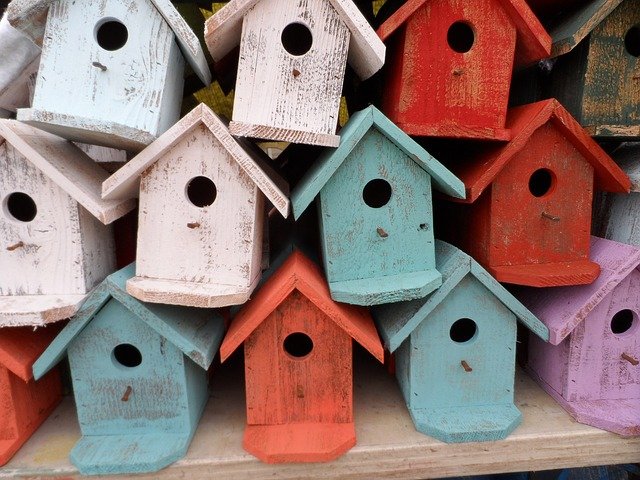
Birds don’t require fancy birdhouses to nest in
Birdhouses are often referred to as nesting boxes or birdboxes. They can provide essential nesting areas for several Florida bird species. Not all birds will use nesting boxes. American goldfinches, orioles, and cardinals do not use bird boxes.
Some backyard Florida birds that will use a birdhouse:
- Mourning doves
- Eastern bluebirds
- Purple martins
- Carolina chickadee
- Downy woodpeckers
Importance of Birdhouses for Breeding Birds
The natural habitats of birds continue to face many challenges. This includes habitat loss and urbanization. Dead trees with cavities serve as natural nesting spots. But these are becoming increasingly rare. This is due to factors like deforestation and urban development.
Learn how these challenges have threatened songbirds and why it’s essential to protect them.
For as long as these issues persist, birdhouses remain essential. Providing birdhouses in your backyard offers them safe and suitable nesting sites. These are crucial for the survival and breeding success of many bird species. They offer a valuable alternative. One that mimics the sheltered and secure environment that wild birds seek.
Birdhouses also help mitigate nesting site competition. Some species face intense rivalry from other cavity-nesting birds that take over natural nest cavities. Such competitors include invasive birds like European starlings and house sparrows. Offering birdhouses designed for desirable birds gives them a competitive edge against invasive species.
Birdhouses enable us to monitor and study bird populations more effectively. Researchers and citizen scientists can place nest boxes strategically. This helps them collect valuable data about nesting habits, reproductive success, and population trends. This information provides scientific insight. As well, it helps with the conservation efforts of birds and their habitats.
Different Types of Birdhouses
Attracting birds to your backyard isn’t quite as simple as setting out one type of birdhouse. A key aspect is putting out multiple types of birdboxes.
Many birds have a preference for a specific birdhouse design. For example, bluebirds prefer an enclosed bird box. Robins, on the other hand, prefer an open platform nest box. Providing a diverse range of house types can cater to these various needs.
Here are common birdhouse types, their features, and the birds they attract:
Type of Birdhouse | Description |
Songbird House | These houses are designed for a variety of songbirds like finches, chickadees, and sparrows. They generally feature smaller entrance holes to discourage larger birds and predators. |
Bluebird and Tree Swallow House | Specifcally designed for bluebirds and tree swallows, these houses have a larger hole for the birds to fit in. They’re often equipped with predator guards and are usually placed on poles in open areas. |
Purple Martin House | These houses are large multi-compartment structures, as purple martins are social birds that nest in colonies. They are usually elevated on a pole and placed in open areas near water. |
Robin Nesting Platform | Unlike an eclosed structure like a regular birdhouse, these nesting platforms have a partial roof or are open on three sides. They be affixed to the side of a building, tree, or on a pole. |
Dove Nesting Platform | Similar robin nesting platforms, these houses are open on all sides. Particularly popular mourning doves, although other doves may use it, too. |
What Makes a Good Bird House
A good birdhouse for attracting birds to your backyard should have a few key features. It should have an appropriate entrance hole size to exclude larger predators. It needs to have proper ventilation to regulate temperature. There should be a removable or sloped roof for easy cleaning. The materials should be durable and weather-resistant. The design should mimic natural nesting sites.
There are several design considerations for a birdhouse:
- Hinged door for convenient viewing and easy cleaning
- Untreated exterior-grade lumber that’s not painted or sealed inside
- Drainage holes for proper drainage of rainwater
- Overhanging roof that should extend a few inches beyond the entrance hole
- Ventilation holes for proper air circulation within the box
- Raised bottom floor to keep the nest dry from rainwater
- Avoiding perches that provide easy access to predators
- Correct hole size that meets the specific requirements of desired bird species
With these features, you ensure a safe and suitable nesting environment for wild birds. Their chances of successful breeding and raising their young increase greatly.
Another aspect of bird safety is protecting visiting birds from bully birds and predators
Best Practices for Setting up Birdhouses
To effectively attract nesting birds, it’s crucial to set up a bird house correctly. You can create an ideal haven by following best practices. Bird boxes need to match the requirements of the specific species you’re trying to attract.
Sometimes, multiple species will use the same birdhouse design and often have similar preferences. For example, the purple martin, house sparrow, and European starling will all nest in the same colony housing style.
Smaller cavity nesters are very particular about the entrance hole size. This includes tufted titmice, Carolina wrens, and Carolina chickadees. If the hole is too large, they will look elsewhere to build a nest. There are different factors you should consider with a birdbox.
There are many factors you should consider with a birdbox:
- Placement: Mount bird houses on sturdy poles, trees, or buildings at least 5–10 feet above the ground and consider specific habitat preferences of different species
- Orientation: Face the entrance hole away from prevailing winds, making sure it’s in the direction that provides shade during the hottest part of the day
- Protection: Use predator guards and reduce the risk of predator ambush by placing the house away from shrubs and branches
- Distance: Provide adequate spacing between houses based on the species
- Maintenance: After each breeding season, regularly inspect and clean birdhouses
- Monitor: Observe nesting activity and record species information and health
- Natural Surroundings: Enhance nesting success with native plants nearby
As well, you should consider placing out birdbaths along with birdhouses. With these tips, you can maximize the chances of attracting nesting birds.
Handling Threats: Predators and Nuisance Birds
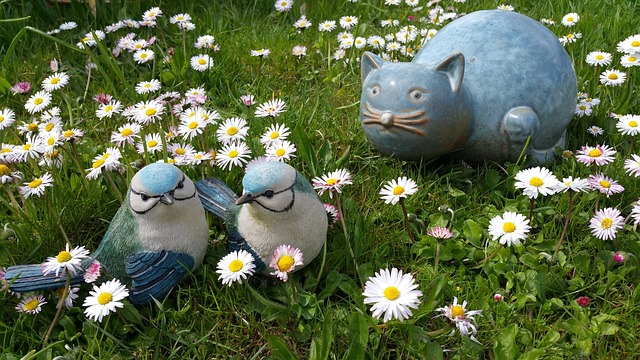
Cats are one of the biggest threats to bird
Most birds are a welcome sight. However, some people consider certain birds to be nuisances due to their behavior or presence. Crows, grackles, European starlings, and house sparrows fit this list. Nuisance birds are notorious for bullying at feeders and may cause harm to other birds.
It’s essential to protect birds from predators and nuisance birds. Nesting birds and their babies are very vulnerable. Common predators include squirrels, raccoons, snakes, cats, and hawks. You can take several steps to appropriately safeguard your birds.
There are several steps that can be taken to help protect birds against predators:
Method | Prevents | Steps |
Predator Detterents | Climbing Predators from Accessing Birdhouses | Baffles and hole restrictors are good options. |
Proper Placement | Predator Ambush | Consider the placement of both birdbaths and houses. Be sure to keep them away from overhanging structures or bushes. |
Nestbox Design | Larger Predators and Nuiscance Birds from Accesing Bird Houses | Opt for birdhouses with predator and nuisance bird resistant features. There should be no perches. |
Monitor Nests in Bird Boxes | Predation Attempts | Check the nest often for signs of unwanted guests, like snakes, mice, and other predators. |
Managing predators and nuisance birds is a crucial aspect of making a safe space for desired birds.
Final Thoughts
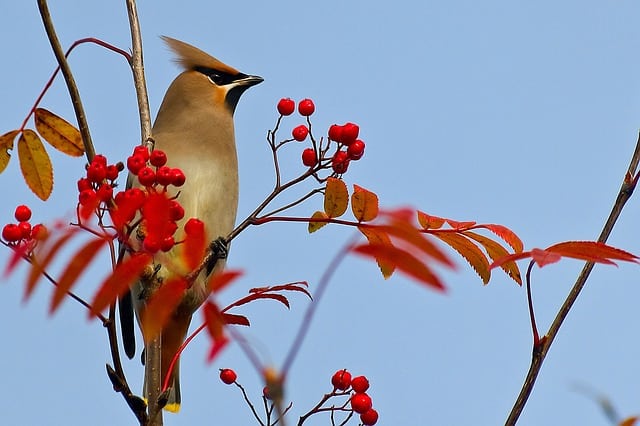
Some birds enjoy the fruits or berries of tree and shrubs, such as the cedar waxwing
By implementing bird-friendly practices, you become an advocate for protecting natural spaces. These practices include providing food, water, shelter, and native plants. Creating a backyard bird haven enhances the natural environment.
Some key benefits of attracting birds to your backyard:
- Natural pest control
- Pollination assistance
- Ecological balance
- Educative prospects
- Visual appeal
- Fostering conservation awareness
What methods do you use for attracting birds to your backyard in Central Florida? Let us know in the comments below.