

Cleaning your bird feeders and suet cages is an important yet often overlooked detail. When you invite birds to your backyard, it should be a high priority to provide them with a safe, clean environment. Cleanliness directly impacts not only bird health but your health too.
Unclean bird feeders can breed harmful bacteria, mold, and diseases among bird populations. The Cornell Lab of Ornithology points to the importance of regular maintenance of feeders to prevent this. Proper cleaning is essential to keep visiting birds healthy.
Continue reading to discover the proper method for cleaning your bird feeders.
Importance of Cleaning Your Bird Feeders
What happens if you’re not cleaning your bird feeders and suet cages properly or maintaining them on a regular basis?
Dirty bird feeders pose a risk to both you and visiting birds. Dirty bird feeders can also harbor harmful bacteria and fungi. Salmonella, avian influenza (bird flu), and house finch eye disease can thrive in unsanitary conditions.

Thoroughly clean and disinfect dirty bird feeders and suet cages regularly to reduce the spread of diseases
While cleaning and sanitizing your feeders are important steps, you also need to ensure that they are disinfected to destroy disease-causing microorganisms. You should provide birds with welcoming, clean, and safe areas to eat.
Learn how to make a clean, inviting space for birds by cleaning your concrete birdbath.
When to Clean Bird Feeders
During dry weather, clean your feeders monthly. However, if you have a lot of traffic to your feeders or wet, humid weather conditions, you should clean them more often. If you see a visibly sick bird at your feeders, you should take them down immediately and clean them.
Nectar feeders should be cleaned every time you change the sugar water, about every 3-4 days. It should be done daily in hot, humid weather. Jelly feeders should be cleaned every day regardless.
Cleaning your bird feeders and suet cages does take a bit of effort and planning, but it’s a necessary responsibility
Suet cages get messy pretty fast. They should be cleaned about every two weeks. Sooner if the weather is hot, or damp, or if feeders show any signs of mold. Premade no-melt suet is the perfect fix because it won’t melt in the scorching summer sun.
What Not to Use to Clean Your Birdfeeders
When cleaning feeders, it’s crucial to avoid certain substances that may harm birds or the environment. You should steer clear of strong chemical cleaning agents. Ammonia, bleach in high concentrations, all commercial cleaners, and most household cleaners are toxic. Even small amounts of these chemicals can cause health issues for birds if ingested. In some instances, it might result in death. Always choose gentler options that are safe for birds.
Steer clear of abrasive cleaning materials, such as steel wool. These can damage the surface of your bird feeders. Surface abrasions and scratches can easily become sites for mold and bacterial growth. For efficient cleaning, it’s recommended to use a softer brush and a scrubby sponge that won’t damage the surface.
Now that we know what not to clean our feeders with, let’s read on and find out what we should use.
Soap and Water vs Vinegar vs Household Bleach: Which One to Use
There are several bird diseases that can be spread at feeders. However, there are five common illnesses that often plague them. Many times, these illnesses result in death for these birds.
These five common bird diseases typically cause death by starvation or predation:
- Salmonella (bacteria): causes dehydration and starvation.
- Aspergillus fumigatus (fungus): causes pneumonia.
- Avian pox (virus): causes vision and eating impairment.
- Trichomoniasis (parasite): causes throat infection.
- House finch eye disease (bacteria): causes blindness.
Some of these are zoonotic, which means they can infect you, as well. In 2021, there were a dozen states where 29 people became infected with salmonellosis, which was linked to wild songbirds.
Soap and water, vinegar, and bleach are often suggested as disinfectants for wild bird feeders and suet cages. But which ones work best to reduce the spread of these illnesses? Let’s take a look at our options.
Dish Soap and Water
A study was carried out to identify the best method to lower salmonella presence on bird feeder surfaces. The researchers concluded that scrubbing with soap and water was less effective than soaking the feeders in bleach. Unlike the bleach method, the soap and water still left traces of salmonella.
Soap lifts germs off of surfaces which are then washed down the drain. Dish soap isn’t a sanitizer. So disinfectant-wise, it’s not going to be able to prevent any illness at bird feeders.
While dish soap may not work as a disinfectant, it does work well as a pre-scrub. It helps to loosen and remove debris, dirt, seeds, and droppings from bird feeders.
White Household Vinegar
White household vinegar is effective against certain bacteria and viruses, like some foodborne diseases. However, it has not been tested by the Environmental Protection Agency (EPA). Therefore, it is not an EPA-certified disinfectant. It is about 80% effective in killing germs and does not have the 99.9% effectiveness that the EPA requires. White vinegar is considered a cleaner for dirt and grime.
While bleach is more effective than vinegar at killing diseases, vinegar is better than nothing at all. Instances where you might need to use white vinegar instead of bleach:
- If you have respiratory problems.
- If you wish to use a less harsh and chemical-free, non-toxic alternative.
- If you’re cleaning a wooden bird feeder. Wood is known to absorb the smell of bleach and the odor may linger no matter how thoroughly you rinse it.
Just keep in mind that you will need to allow a longer soaking period than if you were using bleach. So, when it comes to disinfecting feeders, vinegar is not going to be your best option.
Household Bleach
Bleach meets the EPA disinfectant standards of killing 99.9% of germs and viruses. It greatly reduces the five common pathogens that are often contracted at feeders. On most bird feeder materials, bleach is going to be the best at fighting bacteria. Let’s take a look at how well 10% bleach performed when compared to white vinegar and soap and water.
The following shows the efficacy of these 3 commonly used products against diseases on bird feeders:
Disease | Dish Soap + Water | White Vinegar | Household Bleach |
Salmonella | No | Yes | Yes |
Aspergillus fumigatus | No | No | Yes |
Avian pox (avipoxvirus) | No | No | Yes |
Trichomoniasis | No | No | Yes |
House finch eye disease (mycoplasmal conjunctivitis) | No | No | Yes |
A number of microbes on bird feeders won’t be removed with a simple vinegar soak, even long ones. For this reason, Central Florida Weather thinks it’s wiser to use the bleach solution, which is endorsed by many birding experts. Creating a 10% bleach solution (one part bleach to nine parts water) as suggested makes a powerful disinfectant. This bleach solution is more effective than white vinegar or soap and water to clean, sanitize, and disinfect your feeders.
Always check with manufacturer recommendations before using bleach on feeders so as not to damage surfaces. If in doubt, it’s wise to test a small hidden area before proceeding.
How to Clean a Bird Feeder

You probably have most of the supplies that you need to clean your bird feeders and suet cages already
Cleaning your bird feeders and suet cages does take a little bit of effort and planning on your part, but it’s a necessary task. It helps keep harmful bird diseases in check.
Set up your washing and disinfecting station in an easy-to-access, outside location. This will make cleaning your feeders a smooth process. A large flat surface such as a plastic-protected picnic table or even flat ground or your driveway will work fine.
What you’ll need to properly clean and disinfect backyard bird feeders:
- Extra long dishwashing gloves
- Large capacity measuring cup
- 2–3 larger plastic tubs, bins, or utility buckets large enough to fully submerge your feeders and suet cages
- Mild dish soap
- Stiff bristled brush
- Scrubby sponge
- Old toothbrush (optional)
- Household bleach (be sure to use no-splash or scented vareities because they don’t have disinfectant properties)
- Water
- Old clothes (bleach solution can ruin good clothes)
- Protective eyewear and mask (optional)
- Garden hose with spray nozzle
Step 1: Set up Your Cleaning Station

Having all of your supplies handy in one place makes setting up your washing/disinfecting station a breeze
Collect all of the items needed to clean your bird feeders and bring them to your disinfecting/washing station. Having everything in one area will make the process go faster. Fill one plastic container with water and add a good squirt of mild dish soap. Fill another container with 3–5 gallons of water. At a ratio of 1¾ cup of household bleach to every 1 gallon of water, carefully add your bleach solution to your second container. This will create close to a 10% bleach solution.
If you opt to use a third container for rinsing, fill it now. Otherwise, simply use your garden hose to rinse off your disinfected items when you’re finished.
Step 2: Dispose of old Seed, Suet, Nectar, Fruit, and Jelly

Disposing of bird feeder or suet cage waste can be a messy process
It’s a smart idea to wear rubber gloves when cleaning your bird feeders and suet cages. For your own protection, safeguard yourself from any potential diseases they might transmit. If you have asthma, COPD, or allergies to mold, wearing a mask and protective eyewear would also be wise.
Dispose of old sugar water from nectar feeders. Discard old jelly and fruit from jelly cups and fruit feeders. Give the seed feeders and suet cages a good shake to fully empty trapped residue into the trash.
It’s best not to refill the clean feeders with old seeds or suet or to reuse fruit. Don’t toss old seed or suet on the ground because it might attract pests like mice or rats.
Step 3: Thoroughly Scrub the Feeders or Suet Cages

Pay special attention to the cracks and seams of bird feeders and suet cages where bacteria can grow easily
Wearing old clothes and protective wear, disassemble all removable parts. Toss everything into the soapy water. Using a scrub brush and scrubby sponge, wash and scrub the inside and outside of the bird feeders and suet cages along with all their parts. Remove all stuck-on debris and bird droppings. An old toothbrush can be helpful to clean hard-to-reach spaces and grooves.
Step 4: Soak in Bleach Solution

Make enough 10% bleach disinfecting solution to fully immerse and soak your bird feeders and suet cages
Place the washed items into the tub holding the bleach solution. Submerge them completely. Allow to soak for 10 minutes. This helps kill harmful pathogens.
Step 5: Rinse Well
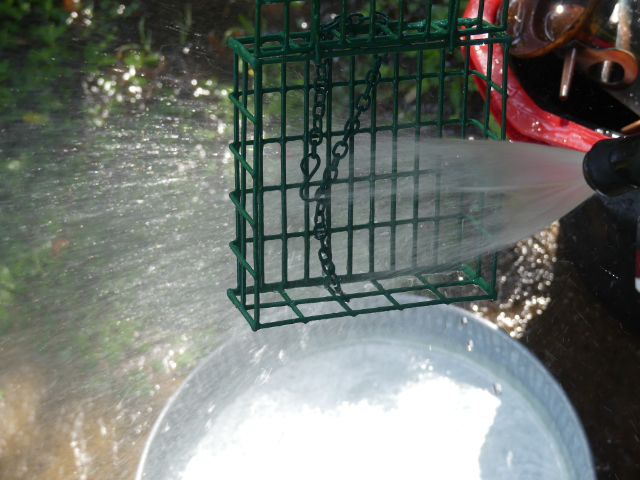
Bird feeders, suet cages, and all their disinfected parts should be rinsed well with clean, clear water
Wearing your protective wear and rubber gloves, remove all the now disinfected parts from the bleach solution. Rinse the feeders either in a third tub of clean water or spray with a garden hose. Ensure all bleach residue is gone by thoroughly rinsing or spraying with clean water.
Step 6: Air-Dry Clean Items
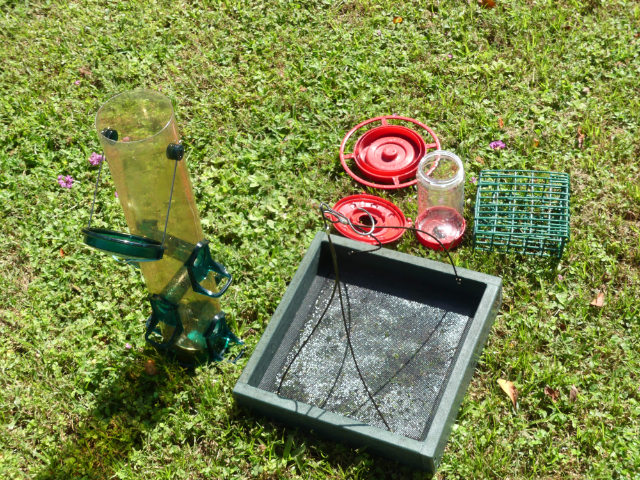
Bird feeders and suet cages need to be completely dry before refilling to reduce the risk of mold and mildew
Lay the items out in the sun until completely dry. This ensures that any remaining bleach is neutralized. The sun’s UV rays and heat adds another layer of disinfection. This way, birds can safely eat from the freshly sanitized feeders without the risk of poisoning or sickness.
Step 7: Reassemble Parts and Refill
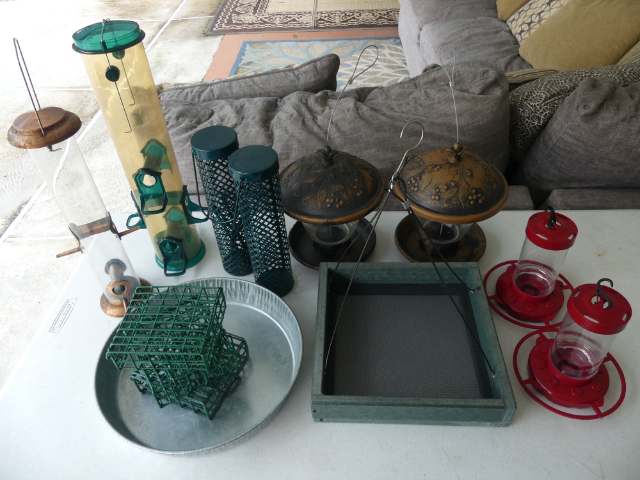
Good job! The hard part is done and all that’s left is to reassemble and refill your bird feeders and suet cages
Once dry, reassemble and refill the bird feeders and suet cages. Now would be a good time to rake out any empty seed hulls under the areas that you hang your feeders. Old debris also carries the same mold and diseases that birdfeeders carry and should be removed as needed.
Make sure not to refill your clean feeders with old or moldy fruit, nectar, jelly, or seeds
Your wild birds will happily resume eating again and you can enjoy watching them from your backyard.
Bottom Line

Clean feeders make healthy birds like this juvenile Carolina being fed by its parents
If you’re trying to attract birds to your backyard, then you should also commit to doing your best to keep them healthy. And remember to respect the advice given by local wildlife or birding groups in your area. They may offer tailored advice that considers the unique needs of the birds found in your locality.
Do you have any special tips or tricks for cleaning your bird feeders or suet cages? Tell us in the comments down below.