

*Note—see if we can replace some of the pictures with our own
There are basic facts about songbirds that most people probably already know. For example, every species of song bird has a song of its own. Songbirds eat insects that harm plants. All song birds perch. All song birds have feathers. These are common facts about songbirds.
But have you considered that there are a lot more song bird facts that you might not know about? In fact, there are facts that we, at Central Florida Weather, find fascinating and want to share with you.
Central Florida Weather has rounded up 35 cool and some lesser-known tidbits about songbirds, such as:
- Anting
- Hollywood finches
- Drunk songbirds
- Brown bluebirds
- Yellow northern cardinals
Discover lots of information as we look beyond what’s ordinary and into some quirks that make songbirds unique. Read on for more obscure facts.
*Missing transition sentence
Songbird Behavior – Fascinating Act of Rubbing Themselves With Ants
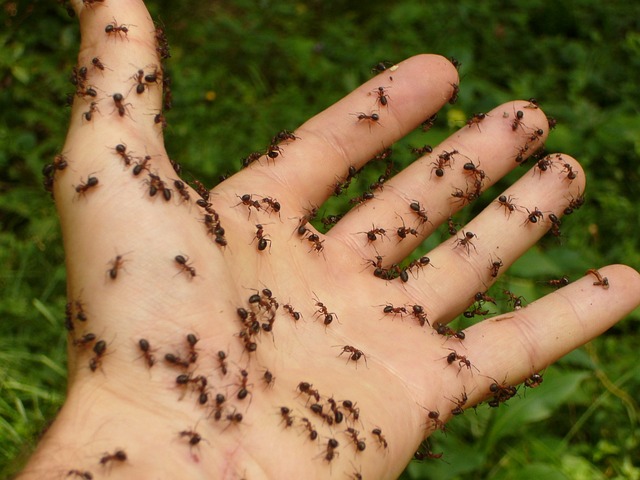
The best time to observe anting might be during the summer months when songbirds molt and parasites are the most troublesome *make sure that this picture isn’t misleading because it’s not a bird and stays on topic
Here’s one of our first facts about songbirds—and an unusual one. Anting is the act of wild birds or animals using specific ants as natural tools on their body. This behavior has been observed since the 1930s by ornithologists and scientists. More than 200 species of birds practice anting, however, it’s mostly observed in Passerines. Some of the most common songbirds that have been observed anting are the northern cardinal, northern bluejay, and American crow.
Anting, though recorded as far back as the 19th century and observed in many birds, is still not well understood. However, it’s thought to be a maintenance behavior for feathers and skin.
The reason for anting is unclear, but there are a few theories for why birds do this. A popular theory is that they’re using the ants’ formic acid (defensive secretions) to either soothe irritated skin due to molting or to control parasites. Maybe it’s simply because the songbird is drawn to the formic acid. Observers have reported anting birds acting “high”, which implies anting might be solely for pleasure without any other purpose. Another theory is that, perhaps, it’s to release the formic acid from the ants’ venom glands before the songbird eats them, which makes for a safe meal that doesn’t harm the song bird.
The act of anting can either be active or passive. Active is the most common form of anting. In active anting, the songbird approaches an ant nest, grabs the ants by the abdomen, and crushes them by rubbing them violently into the feathers along the back and under the wings. In passive anting, the less common form, the songbird will plop down directly on an ant mound and let the ants crawl all over its body. The song bird may even get bitten, but it appears not to bother the bird, nor does it make it uncomfortable.
Anting isn’t always performed by using ants. It can be done using millipedes and beetles, too, which also have formic acid.
Songbirds have also been observed anting with very unusual high-acid content foods and other items.
- Berries
- Lemons
- Orange juice
- Coffee
- Raw onions
- Mustard
- Vinegar
- Soap-suds
- Hair tonic
- Mothballs
- Cigarette butts
- Burnt matches
- Beer
In 2008, researchers examined the possible reason for anting. They investigated two theories. Scientists wanted to know if birds prepared the ants in order to eat them safely. They also wanted to test their theory that birds utilized the ants’ formic acid to treat harmful ectoparasites on the skin and feathers. This study, however, admittedly didn’t explore all other explanations of anting. Therefore they didn’t come up with a definitive reason.
Nine more unusual song bird behavior facts:
- To claim a female barn swallow, a male barn swallow might kill nestlings belonging to a pair. Often, the pair will split, allowing the intruding barn swallow to mate with the female.
- Florida scrub-jays have been known to eat hummingbird eggs and nestlings.
- While defending a nest, brown thrashers have been known to strike people and dogs so hard it draws blood.
- Blue jays are unique for their gular pouch (throat sac). This pouch is located in their upper esophagus. They can carry two to three acorns in their throat sac. As they hide these acorns in trees for later, they’re also helping spread the growth of new oak trees.
- Although sparrows do not swim fast, they can swim fast enough to escape predators if they need to.
- Because the loggerhead shrike impales its catch on barbed wire or thorns, it’s sometimes called the butcher bird.
- Blue grosbeaks and great crested flycatchers are known to use snakeskin as nest material to confuse predators.
- To confuse predators, Carolina wrens build decoy nests.
- Although rare, common grackles have been known to nest in many bizarre nesting areas, including an osprey (birds of prey) nest that’s still in use.
These are just a fraction of our favorite facts about songbirds, so, if you’ve enjoyed this so far, we’ve dug up even more for you. Read on and learn some additional fascinating facts about songbirds that you might not already know.
You can also find more interesting info about some common songbirds of Central Florida in our comprehensive A-Z guide.
Illegal Bird Trade – Hollywood Finches
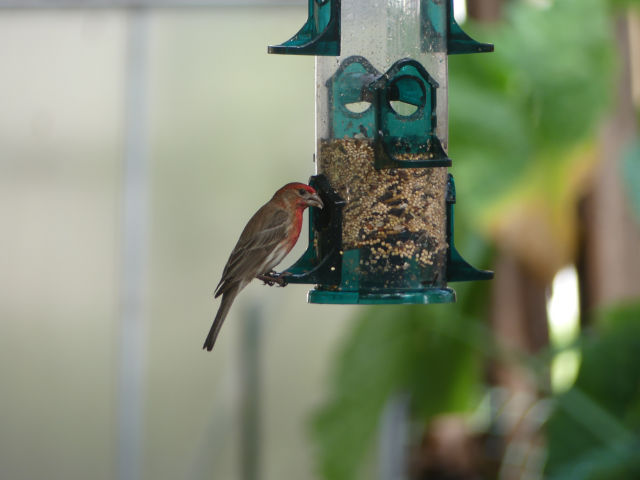
In the early 1940s, as US Fish and Wildlife agents were tightening down on the illegal songbird trade, New York pet shop owners got scared and released all of their Hollywood Finches in the streets for fear of being fined
Once only found in Mexico and the southwestern United States, but, due to illegal transport, sale, and release from California to New York City pet shops in the 1940s, the house finch is now abundant throughout most of the US.
In the 1940s, about 100,000 wild house finches were captured in California. These songbirds were part of an illegal secret ring that shipped them to pet shops on the East Coast.
A Dr. Edward Fleisher alerted the National Audobon Society about a pet shop in New York City that was illegally selling about 20 house finches that they had rebranded as Hollywood finches. From there, undercover Audobon agents sought to catch pet shops in the act of the illegal commercial pet trade. The undercover agents were able to buy 100 of them at one Brooklyn pet shop for $35, which they later released into the wild.
However, the pet shops became aware of the undercover investigation, and to avoid arrest, they also got rid of their house finches. They freed their illegal stock, and the house finches ended up loose in New York City.
By 1980, they were breeding as far south as Georgia. Now, they’ve become one of the most common birds in the nation with a population of 250 million, found in nearly all 50 states, including Hawaii. They’re now enjoyed in backyards even as far south as Central Florida.
Interested in learning how to attract house finches and other songbirds? Then read our article Attracting Songbirds to Your Backyard.
Songbird Diet – Tipsy Passerines
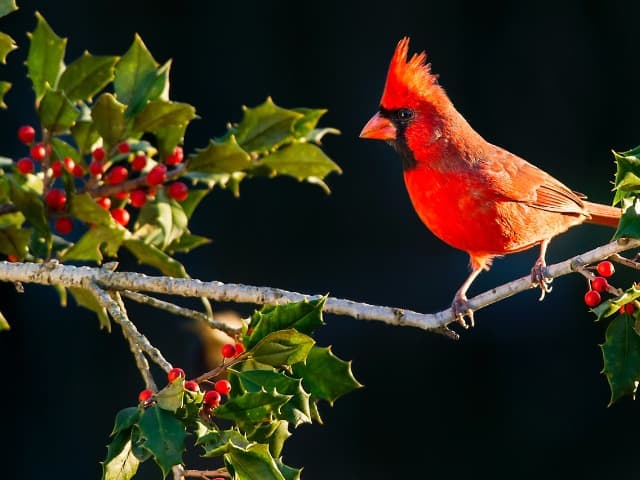
When berry-eating songbirds gorge themselves on fermented berries and fruits, they can become “tipsy”
Blackbirds, cedar waxwings, jays, and thrushes, including American robins, occasionally gorge themselves on fermented berries from trees and bushes such as holly, juniper, fermented blackberries, and crabapples. As a result, they appear drunk, flying into windows, flopping on the ground, and losing their balance. However, as with drunkenness in humans, drunk birds can also make bad decisions, which can ultimately lead to death as well as possible alcohol poisoning.
Three more facts about songbird diet:
- Red and yellow songbirds such as the scarlet and the summer tanager, northern cardinal, American goldfinch, and the yellow warbler get their colors from carotenoid pigments from the berries, seeds, and plant materials that they eat. The richer the source of the carotenoids, the more vibrant the color.
- Eastern bluebirds’ diets typically consist of insects and fruit, however, they’ve occasionally been seen eating larger prey such as snakes, tree frogs, salamanders, shrews, and lizards.
- Summer tanagers are the ultimate bee-hunter. These birds are extremely proficient at capturing bees and wasps. In order for them to eat them, they catch them by the wings and kill them by beating them against a tree branch and then remove the stinger. They’ll also raid hives and kill adult bees or wasps and eat the larvae.
Purple Martin Nesting Habits – Apartment Complex
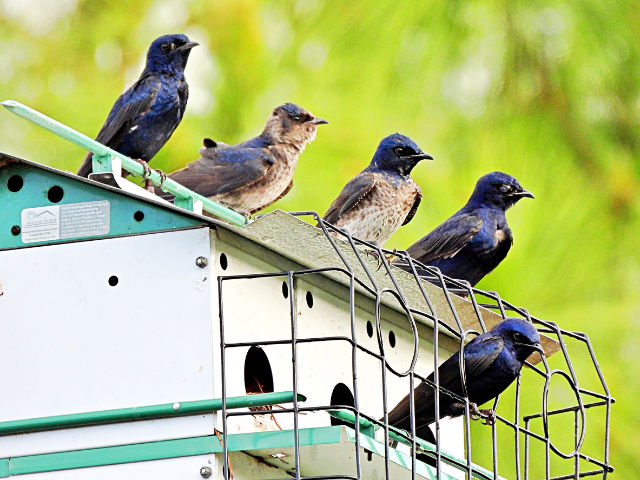
Purple martins are colonial nesters, meaning they like to nest in groups and there are many options when choosing housing for them
Purple martins migrate from South America to North America and are the largest member of the swallow family in the United States.
They appear in Central Florida in mid-January for their breeding season each year. They will reuse the same nesting location yearly as long as the housing is well fit for them.
Eastern purple martins are dependent on artificial nesting sites. Without humans, they would likely cease to exist.
In the west, purple martins are still secondary cavity nesters. However, unlike their eastern counterparts, they don’t completely rely on humans. Instead, they use abandoned cavities or other natural nesting sites, such as cacti and dead trees. However, they will also use man-made structures, such as gourds, bird houses, buildings, and street lights.
Purple martins are colony nesters, meaning they prefer to live with other purple martins in a small area in a community-like setting. Well-established martin colonies can hold upwards of 200 breeding pairs of martins. Newly-established colonies can be as few as two mating pairs.
Purple martin colonies are typically set up in the same areas that are frequented by European starlings and house sparrows. In fact, they’d probably be the first ones to find newly established martin colonies, which can pose a problem to the martins.
You may also find tree swallows and eastern bluebirds nesting in your purple martin houses. Unlike house sparrows and European starlings, they don’t pose a threat. Do not remove these songbirds, their nests, or their eggs because they are protected by the Migratory Bird Treaty Act (MBTA) and are in need of habitats.
House Sparrow Aggressive Attacks on Purple Martin Colonies
House sparrows and their mates will ambush a purple martin’s home. Martins, unlike house sparrows, will not combine efforts to defend their territory. Once the territorial sparrows have taken over the targetted martin’s home, they may begin attacking neighboring martins in the colony.
A purple martin inside its nest cavity has the advantage, but outside the nest cavity, the house sparrow often wins. Although purple martins are larger and have much wider beaks, the house sparrows are relentless attackers and use the open space to their advantage. They are usually successful in chasing off the purple martin.
House sparrows will often maim or kill purple martins with their sharper vice-like beak. This makes the house sparrows formidable fighters. Both house sparrows and European starlings will promptly eradicate martin eggs and kill hatchlings while they’re unguarded.
Fortunately, there are starling-proof additions to pair with a purple martin birdhouse. These are designed to prevent European starlings from accessing the nesting cavity. Unfortunately, there is nothing to prevent house sparrows from entering a purple martin’s nest cavity.
Both European starlings and house sparrows can pose a potential threat to eastern purple martins. They should never be permitted to nest in a martin’s colony and should be removed.
Nesting Songbirds – What Are Obligate Cavity Nesters
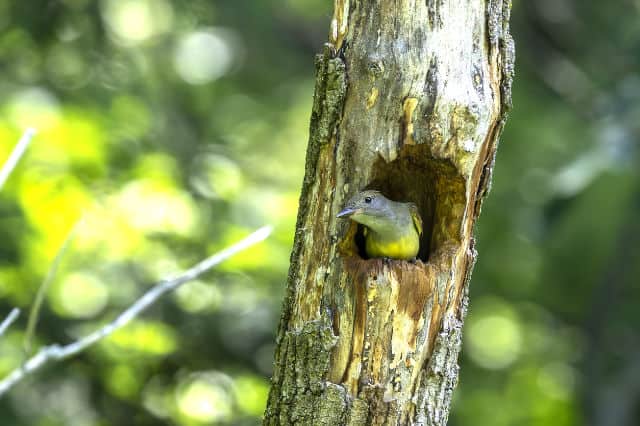
Great crested flycatchers are the only flycatchers that are obligate cavity nesters
Cavity nesters make up half of all birds. There are three types of obligate (birds that must use a cavity to nest in) cavity nesters
The first type of obligate cavity nesters is strong excavators that create their own cavities in dead and live trees with tougher wood. These are woodpeckers. Often, these abandoned cavities left by the woodpecker become homes to other birds and mammals.
The second type of obligate cavity nesters is weak excavators that make their own cavities. They’ll also take up residence in a pre-existing cavity. Song birds like the Carolina chickadee and the brown-headed nuthatch, for example, fit this category. They require rotten or dead trees that are soft enough for them to make a hole in since their beaks are weaker compared to the woodpecker. They will also use birdhouses.
Finally, the third type of obligate cavity nesters is secondary cavity nesters. Many of our Florida song birds, including the great crested flycatcher, tree swallow, and eastern bluebird fall into this category. Secondary cavity nesters build their nests on top of old nests inside the abandoned cavities. Like weak excavators, these song birds are also open to nesting in bird boxes.
Songbird Feathers – When Blue isn’t Blue
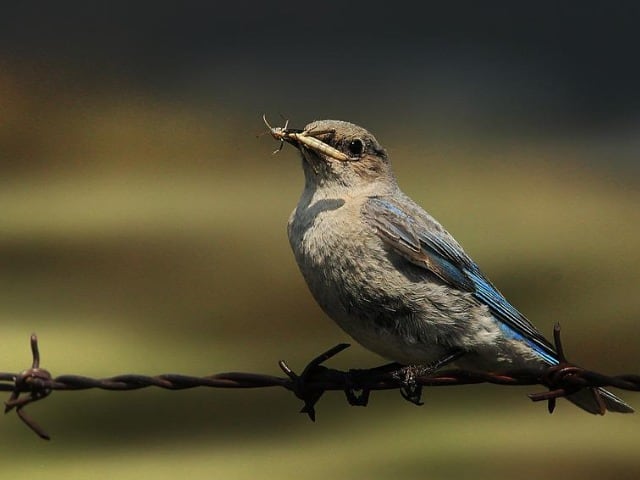
There’s no such thing as a blue-colored bird since blue is not a pigment—instead, it’s an illusion that tricks the eye
Here’s another interesting concept that we found to add to our facts about songbirds.
Songbirds such as indigo buntings, blue grosbeaks, blue jays, and bluebirds aren’t blue at all. Instead, they’re actually a grayish-brown color. However, our eyes perceive the lightwaves on the feathers as blue.
Color in nature comes from pigments in the carotenoids in the food that birds, animals, and insects eat. In the case of birds, the color blue is thought to come from small air pockets inside the feather. These air pockets refract (scatter) light. Light bounces off the air pockets and only the blue wavelengths return to our eyes, which is why we see blue instead of brown.
The further a blue songbird is from your view, the less blue and more grey-brown it looks. Up close, we see the brilliant blue optical illusion.
Song Birds That Talk Like Humans – And Other Mimicry Sounds
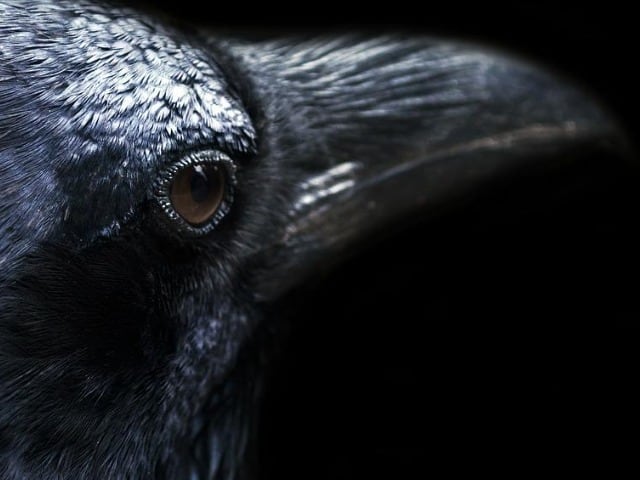
Crows are able to talk like parrots do and are pretty good at mimicking human speech
Those in the corvid family, including songbirds like northern blue jays, red-winged blackbirds, Florida scrub-jays, and American crows can learn to mimic multiple sounds. The blue jay and crow can also learn to mimic human speech.
None of this mimicry, however, is true communication. It is simply an imitation of what these song birds have learned.
Blue jays can mimic hawks, like the red-tailed and the red-shouldered hawk, so well that it can be hard to distinguish the blue jay from a hawk based on sound alone. Other songbirds, like the European starling, can mimic both inanimate object sounds and other birds. Common grackles are notorious for mimicking car alarms and cellular ringtones.
Songbirds in the Mimidae family, like gray catbirds, northern mockingbirds, and brown thrashers, can learn and effortlessly reproduce sounds made by other birds, animals, and inanimate objects.
Gray catbirds make a “meowing” noise like a cat, hence their name, as well as mimic tree frogs, other birds, and 100 other sounds. Mockingbirds can remember and also make about 100 bird, animal, and inanimate object sounds. They even mimic other mockingbirds mimicking other sounds.
Thrashers have the ability to mimic around a whopping 200 sounds, including Central Florida song birds like the white-eyed vireo, tufted titmouse, and northern cardinal. Because of that, they are considered North America’s best mimic.
Bird Song Facts – Do Female Song Birds Sing
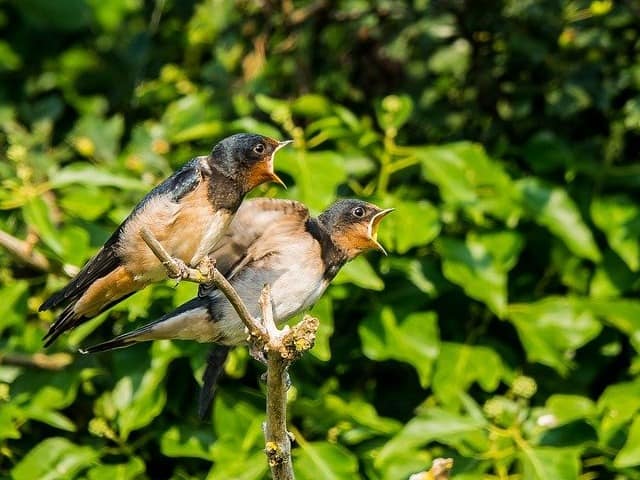
There’s now proof that, even though the female barn swallows sing less often than males, the females does produce birdsong rather than just simple calls and sounds during their breeding season
It’s been a long-held belief that if you hear a songbird singing, you’re probably hearing a male. For years, scientists and ornithologists exclusively studied male song bird birdsongs. They erroneously believed any female birdsong was functionless or the result of a hormonal abnormality.
This oversight may have been because female migratory songbirds of North America are less likely to sing. The majority studied were migratory. Or, perhaps, because females usually sing only during their breeding season, their singing may have been overlooked.
Despite hundreds of scientific studies on barn swallows, the female barn swallow’s bird song was never researched. However, a 2020 study conducted on barn swallows was one of the first studies to exclusively examine female bird song. Turns out that the female barn swallow does sing!
Males sing to proclaim and defend territory, to attract and impress a potential mate, and, sometimes, just because they like to hear themselves sing. In newer studies, females are thought to sing because they compete with rival females, for pair bonding, and to attract a mate.
Some females also do what’s called “signal jamming”. The female interrupts her mate’s songs by adding her own song to his. This makes his song less attractive to rival females and lets them know that he’s unavailable.
A 2016 study found that, of the 1,000 song bird species that were studied, a whopping 64% of female songbirds, globally, do in fact sing. This further helps clear up the myth that female songbirds don’t sing.
Two additional singing song bird facts:
- Occasionally during the mating season, mateless songbirds, such as the northern mockingbird or the yellow-breasted chat, will sing both day and night. The purpose of this is to try and attract a potential mate. Even though these songbirds are diurnal (active only during the day), it’s thought that they sing during these hours because there is less ambient noise to compete with their voice. You may hear them sing in the wee hours of the morning, loudly and incessantly.
- It is said that the song of the wood thrush is the most beautiful birdsong in North America.
Songbird Family – Family Ties
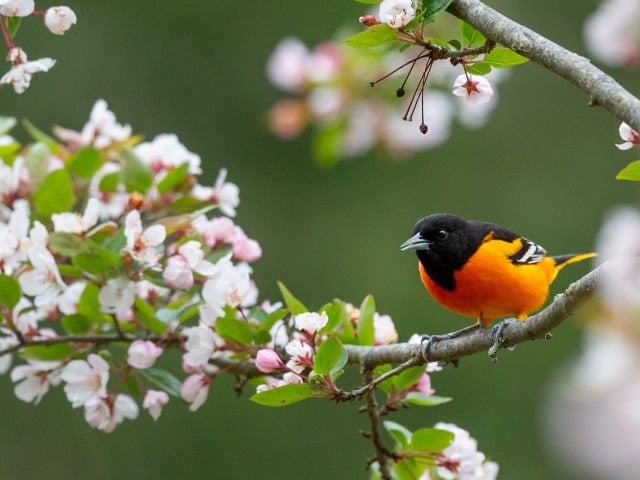
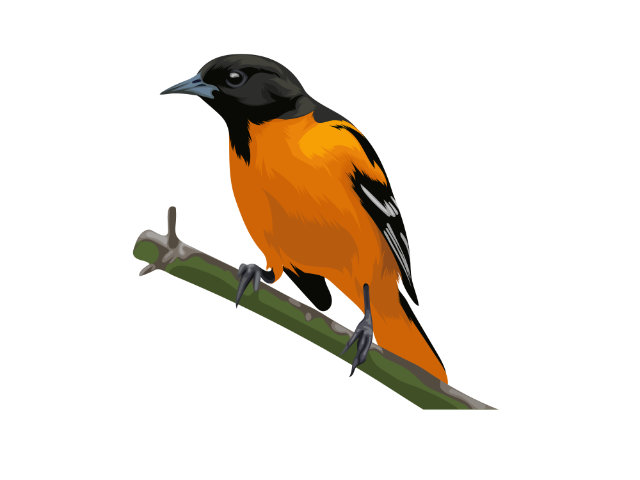
Baltimore orioles are called orioles because they resemble the Old Word orioles of Europe
The Baltimore oriole, just like all orioles of America, isn’t an oriole at all—surprisingly, New World (birds of the Americas) orioles are classified in the blackbird family, which also consists of grackles, red-winged blackbirds, and meadowlarks. Only Old World (birds of Africa-Eurasia) orioles are part of the family Oriolidae, thus making them true orioles. These icterid (New World) blackbirds are named “orioles” because of their resemblance to Old World orioles.
Interestingly, like other modern birds, the Baltimore oriole is under a much older family tree—dinosaurs. Not all dinosaurs are extinct. Birds are the only descendants left of the dinosaur clade, and many of them nest right in our own backyard!
Do Birds Carry West Nile Virus – Yes, and Other Diseases too
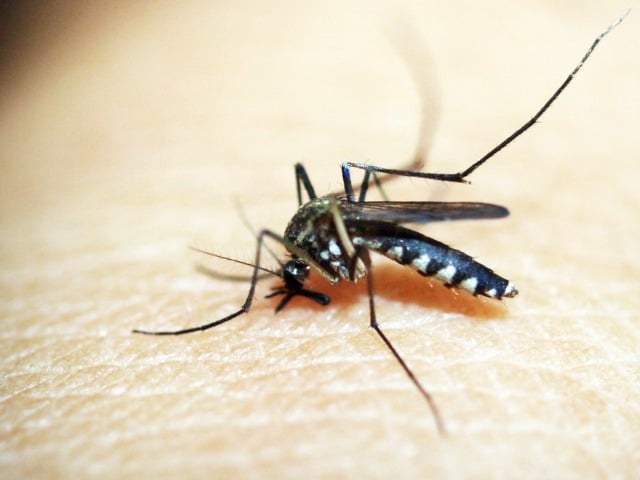
The American robin is frequently bitten by mosquitoes infected with West Nile, spreading it to non-infected mosquitoes, which can then infect humans
American robins are asymptomatic carriers and super-spreaders of the West Nile virus. This means that they are bitten by non-infected mosquitoes, and then the mosquito becomes infected. In turn, the mosquitoes become vectors of transmission that infect other birds, animals, and humans once they are bitten.
Interestingly, mosquito species that carry West Nile seem to prefer American robins to humans. In fact, when robins migrate at the end of their breeding season, you may start to notice an increase in human West Nile virus cases, depending on where you live.
Why is that? A theory is that the mosquitoes’ favorite diet of American robin blood is no longer available, so they begin feeding on humans and other mammals for their blood meal.
Similarly, American robins and other songbirds can also carry Borrelia burgdoferi, the bacteria that causes Lyme disease. This can then be passed on to ticks that bite and feed off the American robin. Once finished with feeding, the newly-infected tick falls off the robin and finds a new host.
American robins cannot directly infect you with West Nile or Lyme disease. Instead, it’s the insects that bite them, and then bite and infect humans and other animals.
Other zoonotic diseases that certain song birds, such as European starlings, some blackbirds, and some sparrows, carry:
- Mycobacterium avium complex
- Cryptococcus neoformans
- Salmonellosis
Yellow Cardinal Sighting – Xanthochromisim Facts
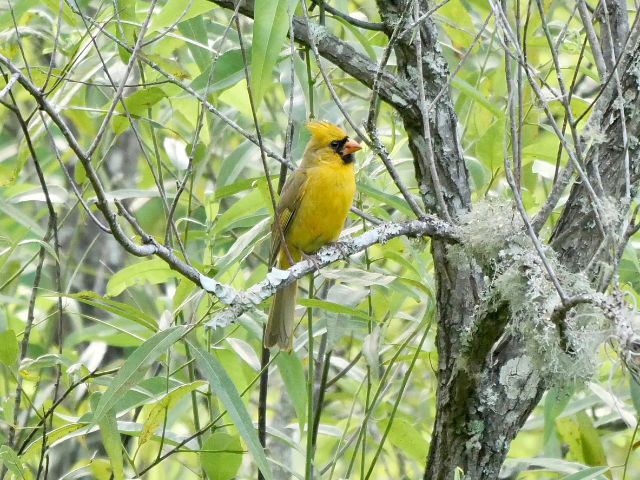
One of the rarest birds along the east coast, the yellow cardinal has been seen in Pennsylvania, Georgia, and three times in Florida, twice in 2020, and once in 2022, most recently at the University of Florida (UF).
It’s also been sighted in states such as Alabama, Delaware, Arkansas, Louisiana, Tennesse, Illinois, and Ohio. It’s estimated that there have been no more than fifteen yellow northern cardinal sightings in North America at the time of this writing.
On March 4th, 2022, in Gainsville Florida, a yellow male cardinal was spotted at UF. This unique songbird had xanthochromia—an interesting genetic mutation of a bird’s plumage. This is different from the yellow cardinal species in South America, which is supposed to be yellow.
Cape May warblers, rose-breasted grosbeaks, and scarlet tanagers are among Florida songbirds affected by xanthochromia, along with the northern cardinal.
Song birds that get pigments from their diet will develop xanthochromism when they lack the enzyme that turns yellow pigments into orange and red colors. Not all birds will look the same with this mutation. Some may be entirely yellow, while others may only have slightly patchy yellow areas.
10 Final Bonus Song Bird Trivia Facts
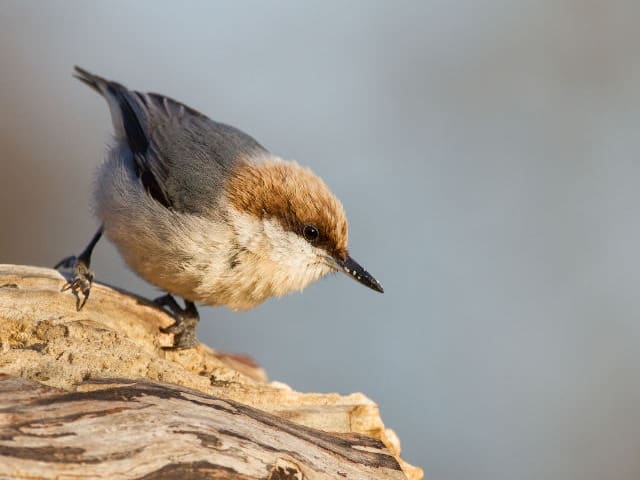
Exclusively in pine forests in the southeastern United States, the brown-headed nuthatch is among the smallest of the 4 nuthatch species of North America
There are so many facts about songbirds, and every time we look, we find a few more. We’ve rounded up 10 last interesting facts for you to read today and, hopefully, you’ve learned something new. Enjoy!
Some final facts about songbirds that maybe you didn’t know:
- Northern cardinals and northern blue jays can become bald during their summer molt after their breeding season because they molt feathers so quickly. The feathers typically grow back within a week.
- A gathering of grasshopper sparrows is called a plague of sparrows.
- The indigo bunting migrates at night and uses the stars to navigate. They may do this because there are more predators during the day and this gives them an advantage.
- Cedar waxwings are so-called because of their waxy red tips on their wings. The tips are actually wax. The purpose of these tips is unclear. The older the songbird, the more tips they have. ***word this better
- The 200 million European starlings in North America are all descendants of 100 European starlings that were released in 1890 in New York City’s Central Park.
- American crows are among what’s considered to be some of the most intelligent birds. Actually, they’re some of the most intelligent creatures in the world.
- Like painted buntings, cardinals used to be kept as caged pets. Now it’s illegal to keep cardinals as pets, sell them, or kill them. The Migratory Bird Treaty Act helps to protect these Central Florida songbirds.
- In the bird world, brown-headed nuthatches are one of the few birds that are master tool users. They’re capable of making tools out of a piece of pine bark, twigs, or pine needles to help them successfully access spiders and insects in tight spaces under the tree’s bark. They’re even known to carry these tools with them from tree to tree. They might also use pieces of bark to hide their stashes of seeds.
- Ruby-crowned kinglets can lay up to 12 eggs in a nest.
- The ovenbird’s name comes from its nest looking like a Dutch oven.
*maybe add something here so this block isn’t so close to the other block
The Takeaway
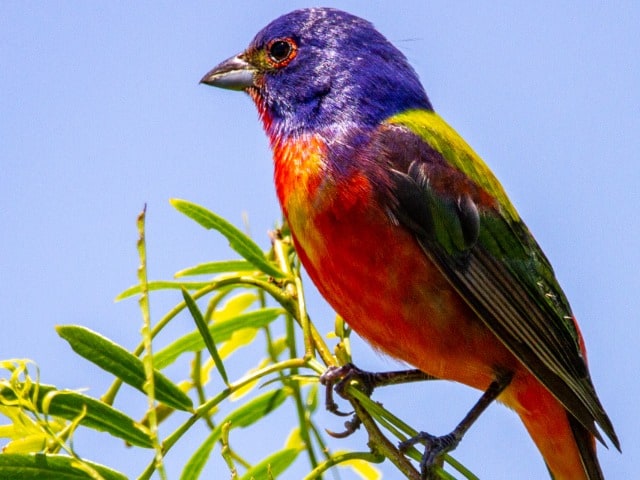
Thanks to the MBTA, these beautiful, wild painted buntings don’t have to live their lives out in bird cages or traps
We’ve talked about many fun and interesting facts about songbirds. From quirky behavior, diet, nesting, colony nesters, and bird song, to drunk song birds, the true color of blue feathers, sound mimicry, lineage, and disease. We even gave you some bonus trivia facts.
What facts about songbirds did you find interesting? Did you learn anything new? Do you have other facts that we didn’t include? We’d love to hear from you in the comments below.