

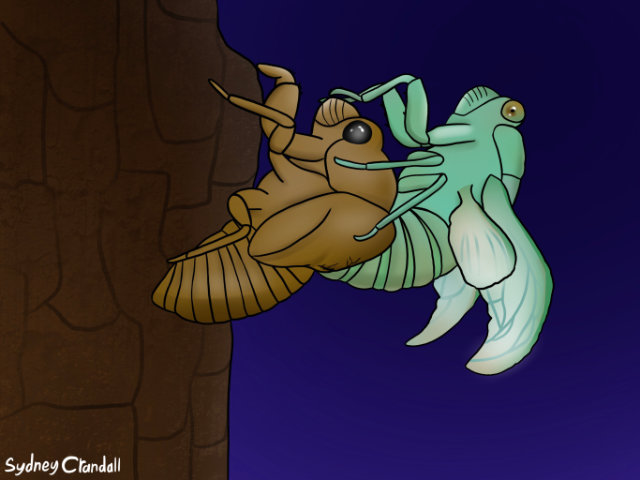
*this info came from CDC—we can choose whther or not we want to use it
During summer you might hear loud, high-pitched, whirring noises coming from trees or woody bushes—it’s likely cicadas. Sometimes they have been referred to as locusts, harvestflies, or jarflies, which they are not. Male cicadas in Florida can be heard all through summer with their loud, incessant droning, using their songs to attract females. Female cicadas can be attracted to loud, buzzing machinery like lawnmowers, hedge trimmers, and leaf blowers. They mistake the noise for a male cicada’s call.
Do periodical cicadas differ from annual cicadas? Yes, both in looks and life cycle length. Central Florida annual cicadas stay underground for only two to four years, emerging yearly. Periodicals will stay underground for 13 to 17-years. Confusing? Read on.
Periodical cicadas are estimated to emerge in the trillions this year, while annual cicadas in Florida will emerge in far fewer numbers. Periodical cicadas are also grouped into broods that are categorized by Roman numerals, whereas annual cicadas in Florida are grouped by species and forewing length. They range in size from less than a quarter of an inch in length (less than 7mm) to as large as 2.25” (57mm) in length.
Cicadas are in the Cicadidae family and are considered true bugs. They belong under the classification Hemiptera. There are more than 3,000 varieties of cicada species in the world—North America has more than 190 species. The only place they aren’t found is in Antarctica.
Florida has 19 species, some of which are:
- Little brown
- Little green cicada
- Olympic cicada
- Seaside cicada
- Hieroglyphic cicada
- Keys cicada
- Dusk-calling cicada
- Dog-day cicada
- Swamp cicada
- Davis’ southeastern dog-day cicada
- Fall dog-day cicada
- Linne’s cicada
- Lyric cicada
- Scissor-grinder cicada
- Resonate cicada
- Similar cicada
Once you’ve heard what a cicada sounds like, you’ll always be able to recognize them every time you hear them—so much so that it could become annoying. Some would disagree, saying that cicada sounds are so common that they tune them out like white noise. Some would argue that they’re pleasant to listen to. Many welcome their songs as the sound of the summer season start.
Brood X Cicadas 2021
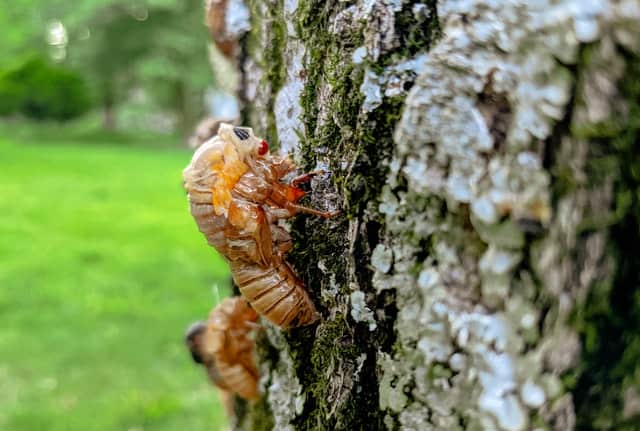
Periodical Cicada emerging
America has seven species of periodical cicadas. Although other countries in the world and other US states have annual cicadas, periodicals are endemic to Eastern North America. Periodical cicadas are divided into what is known as broods and given a roman numeral to differentiate each brood. There are 15 recognized broods so depending on the species, periodical cicadas emerge in one of these two groups every 13 or 17-years.
Usually, most of the brood emerges like clockwork in one of 13–17-year life cycles, but sometimes there are a few that get their timing wrong and they emerge too early or too late. Even with stragglers, this year’s Brood X is the largest and most widely distributed of all the 17-year periodical cicadas.
Their numbers are estimated to be in the trillions, which, for many, is going to be disruptive—such as to businesses, like outdoor restaurants and other outdoor venues, like golf and tennis tournaments. And, unlike annual cicadas, periodical cicadas are so numerous that they can cause damage to trees. Pennsylvania State University says that periodicals may damage fruit trees in two ways—by making slits in small branches of young trees and by feeding on the tree roots for 17 years, taking nutrients from the trees.
Brood X will be emerging from Michigan to Illinois, down to Georgia, and then up through the east coast and into New York in all but one of the states in the states in between—15 states in total. South Carolina does not have Brood X. Instead they will have Brood XIX in 2024, which is the largest of the 13-year periodical cicadas.
Florida once had periodical cicadas, Brood XXI, which is now extinct. The last record of the Brood XXI, known as the Floridian Brood, was in 1870, in the Apalachicola River Valley in the Florida Panhandle. Now the Sunshine State only has annual cicadas.
Central Florida Cicada Season
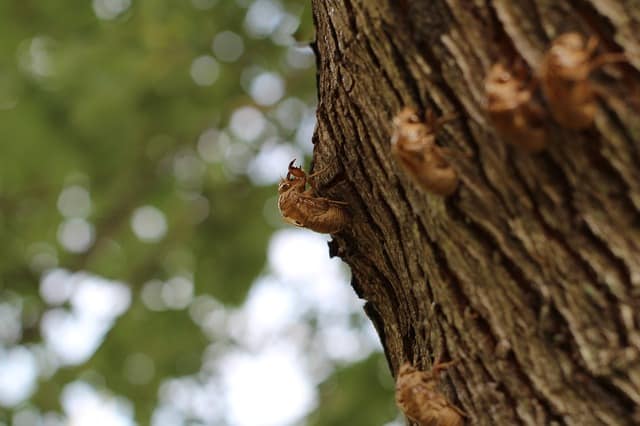
Empty shells from molted annual cicadas
Cicadas in Florida start to emerge when the ground temperature warms up. The National Centers for Environmental Information (NOAA) states that soil temperature must be warmer than 64 degrees Fahrenheit, 8 inches deep into the soil.
Cicada season is also dependent on the species of cicada. For example, some of the Davis’ southeastern dog-day cicadas emerge in summer, while other species emerge in autumn. The duration of each species’ season lasts four-six weeks.
Central Florida’s hot summers guarantee many cicadas. Male cicadas in Florida get louder as the temperature rises. They may become silent when they are scared or when there’s unfavorable weather. If it’s raining, too cloudy, too hot, or too cold, most male cicadas in Florida will stop singing for a time.
Many cicadas in Florida are active during the morning and through the afternoon. Others may sing in the early evening. It’s unusual for cicadas in Florida to sing at night, however, that doesn’t mean that there isn’t an exception or two.
Some people worry that cicadas in Florida will damage their plants and trees. Various deterrents like using barrier tape to catch them, using insecticides to kill them, and netting plants hoping to protect them are unnecessary measures.
Unlike periodical cicadas that damage because of their sheer numbers, annual cicadas in Florida don’t harm plants and trees. Insecticides aren’t very effective and can sicken other animals that eat the cicadas and add unnecessary pesticides to the environment.
It’s true, the nymphs do drink from trees and grassroots underground, however, with the smaller numbers and much shorter life cycle with the annual cicadas in Florida, this is harmless. Female cicadas also make small slits in branches for egg-laying. This shouldn’t harm a healthy mature tree.
The dead branch tip will die and fall off the tree. This process is called flagging. This is seen as a type of light pruning and considered beneficial, clearing weak branches and promoting new, healthy growth.
How Loud is a Cicada
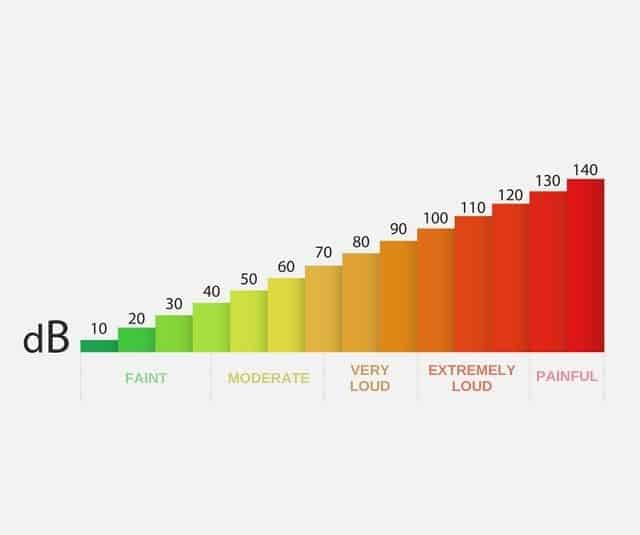
Cicadas in Florida are not the loudest cicadas in North America…thankfully
Many factors influence how loud a sound is to the human ear. This sound intensity is measured in decibels. Decibels (dB) measure how intense a noise will feel to our ears and dB(A) measures both the intensity and how the human ear hearing threshold. dB(A) focuses on hearing damage based on the loudness of particular sounds.
How loud is too loud? Many things influence how loud a sound is, such as volume, frequency, length of time the sound is heard, and how far away you are from the sound. The Centers for Disease Control and Prevention (CDC) says that prolonged exposure to noise over 70 decibels can be hazardous to your hearing. They recommend wearing ear protectors, such as earplugs, to prevent noise-induced hearing loss (NIHL) for anything at 100 dB or higher for longer than a duration of 15 minutes.
The decibel level of normal conversation between people is around 60 dB. Emergency sirens and concerts are about 120 dB. Many cicadas’ mating calls are around 100 dB. And, while it’s true that 100 dB is very loud and over the 70 decibels or lower than the CDC recommends as a safe noise level, there is probably not really anything to worry about. You’d have to have even the loudest cicada in the world right next to your ear for two minutes to do any real damage and annual cicadas in Florida don’t even come close to that decibel.
Many states have noise ordinances laws. For example, the noise and vibration Control Ordinance of Marion County Florida has a noise ordinance in residential areas of 55—65 dB(A) day and night respectively. That’s definitely exceeding that Central Florida county’s sound ordinance. Even so, we wouldn’t expect any citations to be written out for our very loud bug. Annual cicadas in Florida are harmless. They are just loud.
Cicada Call
Male and female cicadas have their own unique sounds for attracting mates. Males make buzzing noises. The male cicada call is one of the loudest sounds in nature. A female can hear male mating calls a mile away. Females don’t sing—instead, they flick their wings to create a clicking noise for male cicadas to hear. Once the female hears the call, it will respond with a click, drawing the male closer to her.
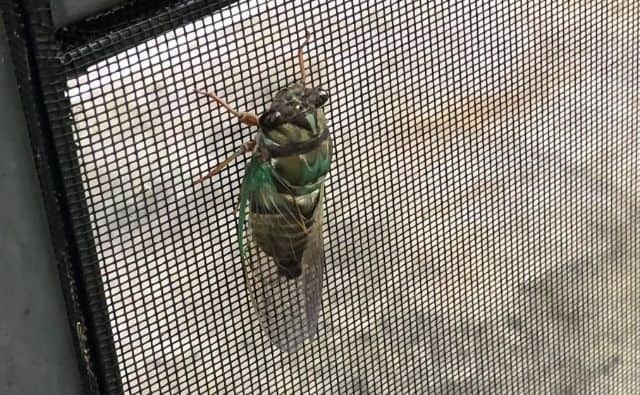
Linne’s cicada crawling up a screen
Males emit their mating sound from a membrane called the timbal, which has tiny round plates located on both sides of the abdomen, just beneath the wings. When the ribbed muscles contract, it pulls the timbal in toward the abdomen. As the timbal starts to buckle, noise is created. As the muscle relaxes, the timbal snaps back outward.
By doing this repeatedly the male cicada tries to attract a mate. To protect their own ears, both males and females have a membrane called the tympana, which is basically the cicada’s ears. The tympana connect to a retractable tendon and auditory organ, so when the male begins to make his high-pitched trill, the tendon retracts, protecting the tympana.
Many people complain about how loud male cicada mating calls are. There are multiple species where a single male’s call can reach 90 decibels, which is about as loud as a lawnmower. Some larger species can exceed 100 decibels, about as loud as a chain saw or a riveter. Some small male cicada species have such a high sound frequency that is only detectable by animals.
Cicadas in Florida may be less bothersome in urban areas. Cicadas prefer more natural tree and woody shrub environments. They are much more likely to bother people with their loud trills in suburban and rural areas. If you find the noise to be too loud for your comfort, invest in some earplugs or noise-canceling headphones.
Cicada Life Cycle
A few days after mating, female cicadas lay eggs. They can lay upwards of 400 eggs, which look like small, white rice grains. A female cicada will use its ovipositor (egg-laying tube) to cut a groove in a tree branch. There it’ll lay its eggs. The branch will provide tree sap that they can feed on once they hatch as nymphs (young cicadas).
The eggs begin to hatch six to ten weeks later. After drinking the tree sap, the nymphs, which look similar to termites, will fall from the branch to the ground and begin to dig using their claws. They’ll dig until they find grass-like roots that they can feed on. They’ll gradually begin feeding on tree roots from the tree they hatched from.
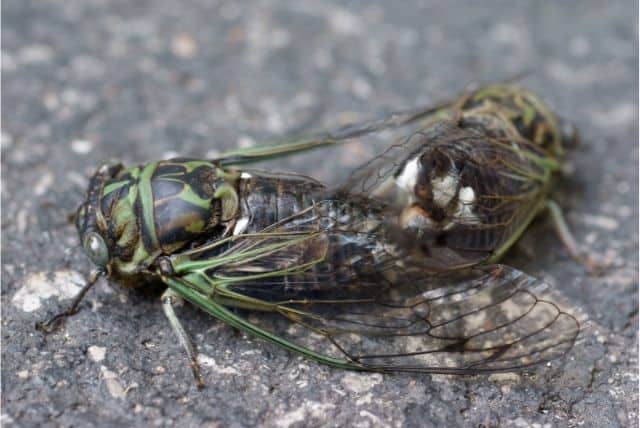
A pair of mating cicadas
Cicadas will go through five instars (life phases) before they are fully mature. The first instar begins with the nymph stage (the stage after hatching) and the last instar ends with the imago stage (the stage of becoming an adult cicada). Once emerging, the nymph will leave behind its exuviae (shell) during its final molt. Oftentimes, the cicada’s exuviae can be found on trees, plants, outdoor screens, and fences just as they were while the cicada was molting.
The molt can take longer than 2 1/2 hours. Once the cicada has molted, it’ll be light green, light blue, or a pinkish white—at this point, it’s in its teneral stage, which means it’s still soft and its colors aren’t fully developed. It takes a while for the cicada to develop its full colors. Finally, it enters the imago stage.
During the remainder of the cicada’s life, it’ll find a mate and repeat the cycle. Even though it’s a two to four-year cycle the broods overlap, which means that cicadas in Florida emerge every year,
8 Common Florida Cicada Species
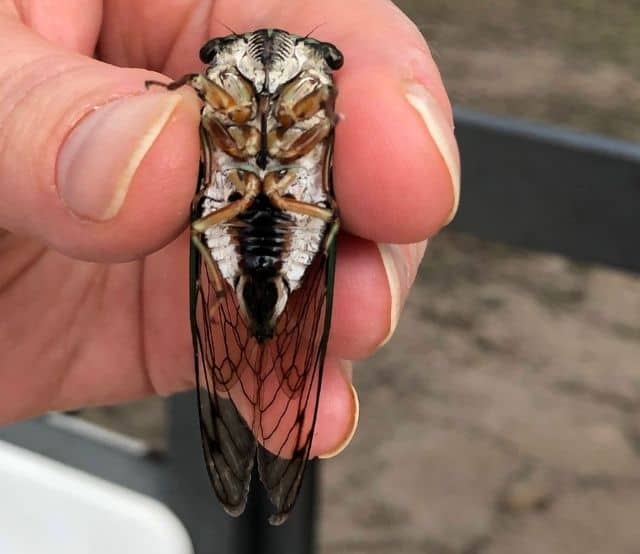
A female cicada has a distinct point at the tip of their abdomen
There are eight species of cicadas in Florida. Their habitats can range from natural areas like deep forests, riverbanks, swamps, rural, and suburban areas, to more urban areas like towns, cities, and neighborhoods with trees or woody shrubs.
All cicadas in Florida have a call of their own, some of which may be confused with another cicada’s call. One way to distinguish one call from another species’ call is to pay attention to the time of day.
Is it for the whole day, but it gets louder towards night? Is it only in the afternoon? These are key facts to observe in order to know what cicada species could be singing.
Another way to help tell what species of cicadas in Florida is singing could be to observe how the song sounds and how long it lasts. Does it start as being quiet and then become louder? Does the pitch adjust throughout the song?
A more difficult way to recognize certain cicadas in Florida is to actually see them. Many times, it’s impossible for the human ear to pinpoint the location of cicada songs. A cicada can be tricky to see if you do come across one since it might fly away. If you do have the opportunity to look at one, it could still be hard to tell what cicada species it is since they can have many patterns and color variations.
Hieroglyphic Cicada
These cicadas in Florida are uniquely colored, having a green-turquoise and black body with a golden-colored abdomen. It’s commonly found in dry oak and pine woods, where they’ll be high up in trees. They’ll begin singing until dusk, with songs lasting 15–20 seconds, each song starting right after the previous one.
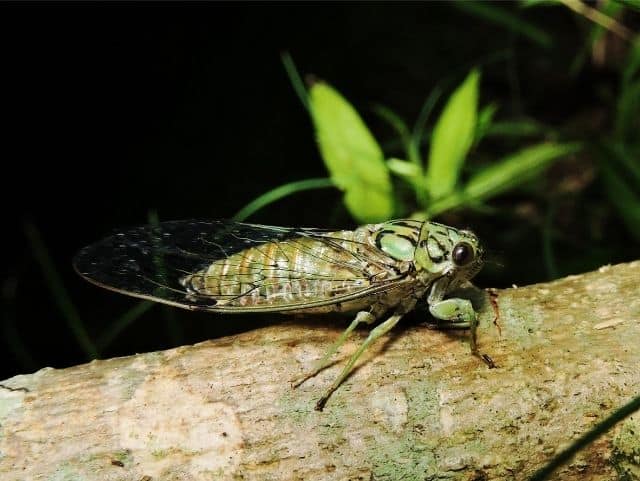
The hieroglyphic cicada is less than one inch long
It’s described as sounding like a model airplane, where the sound starts out quietly and then begins to buzz louder. It has a whining, pulsating sound, which becomes quiet again toward the end of the song. When there are multiple males singing at one time, the sound can become annoying.
Lyric Cicada
Also called buzzsaw cicadas, these cicadas in Florida are recognizable by their distinct buzzsaw-like call that can last for up to a minute each time. They’ll sing throughout the day when it’s warm, but they typically get the loudest toward the evening.
This cicada can be found in forests, orchards, and rural and suburban areas. They’ll be high up in trees that are near water sources like streams. They have a range of color patterns, from various amounts of red-brown color on their thorax and head, to some having slight red-brown color on their heads in the shape of the letter T. They’re known to play dead by tightly tucking in their legs when they feel threatened.
Linne’s Cicada
This cicada inhabits parks, city woodlots, and deciduous forests. Males can be heard singing all day until sunset. When the temperature is high, these cicadas in Florida will sing for up to 15 seconds. Their call starts quietly, gradually becoming louder and pulsing, and then suddenly stops.
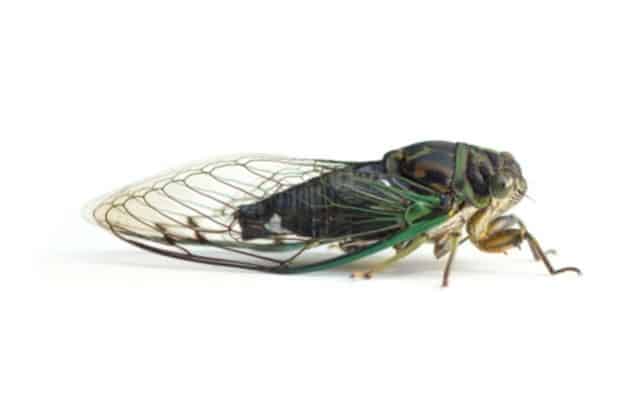
The Linne’s cicada takes two to three years to develop underground as a nymph before they emerge
Color and patterns vary according to the region. Most have a black strip down the cicada’s abdomen and a black face mask pattern. This pattern varies more in the south. They also have a pattern on their head that resembles the letter M.
Little Brown Cicada
These cicadas in Florida emerge from July to August and can be found in prairies and grasslands. Their call is a whining hiss. These cicadas can range from tones of green, olive, yellow, and tan to brown.
Their color patterns either stand out or tend to be more faded. Their color and pattern variations may have to do with regional differences in the species. In comparison to other species of small cicadas in Florida, their head is more narrow.
Davis’ Southerneastern Dog-Day Cicada
This cicada, also referred to as the southern dog-day cicada, has regional pattern differences. Most commonly found in Central Florida, you’ll see that these cicadas are green and closely resemble a Linne’s cicada in size and color. Where they differ is the pattern on their head. Instead of the M that the Linne’s cicada has, the southern dog-day cicada has a marking that resembles the shape of a crown.
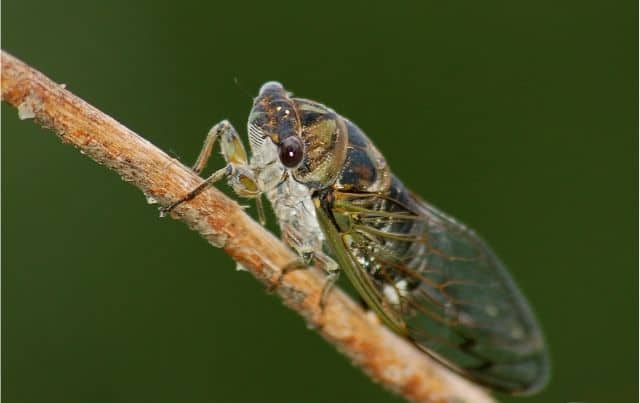
These cicadas in Florida get their name from the hot dog days of summer
Their colors can range from green, browns, olives, and even a mix of these colors. Eye color can also vary, with colors such as blue, green, gray, black, or tan. Their songs begin in the morning and continue in the afternoon. Just like the rest of the cicadas in Florida, the southeastern dog-day cicada stops singing at night.
Their songs can be recognized by their buzz saw noise, yet they don’t consist of the same pulsation sounds that other cicadas in Florida have. Their song follows the pattern of starting out quiet, getting louder, and becoming quiet again towards the end of it, lasting for ten seconds. Their preferred habitat is pine woodlands.
Little Green Cicada
This lime green cicada is known to have a similar song as the little brown cicada. A difference, however, is that they also make a loud clicking noise with the whining hiss.
These are subspecies of the little brown cicada and are found mostly in Florida. They emerge from April to September and often are found in scrub habitats.
Swamp Cicada
Habitats of this cicada include certain fields and meadows, low-growing weedy vegetation, marshes, and swamps. With a dark-colored body, they have bright green coloring on their head and bright minty green wing veins. Their song lasts between 10–15 seconds, which consists of a sound that starts low, then turns into a pulsing sound that gets louder, gets low again, and then suddenly stops.
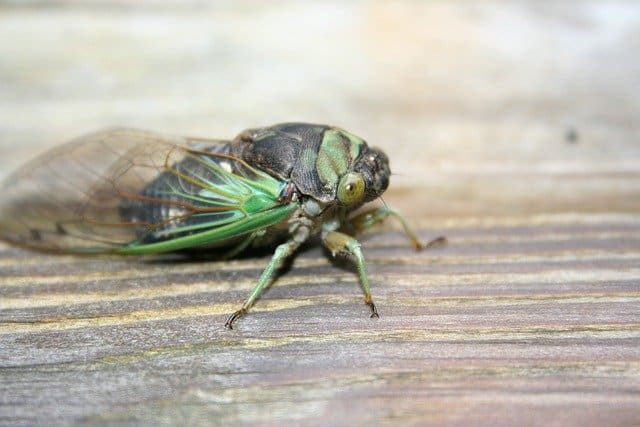
Swamp cicadas are also known as morning cicadas for the time of day they sing
Olympic Scrub Cicada
These cicadas in Florida come in various colors–black, white, green, or brown. With these colors, they also always have some type of red pattern on them. They are the most widespread cicadas in Florida, being found everywhere except for the Everglades. Pine flatwoods, fields, roadsides, and scrub habitats are some common places that they can be found. It’s uncommon to see them outside of Florida.
Do Cicadas Bite
Cicadas don’t bite because they have no jaw-like mandibles to bite with. Instead, they have a beak (rostrum), which is a straw-like mouthpart that’s used to pierce and suck fluids from plant and tree roots. Occasionally a cicada might mistake a human for a tree and try to take a taste, but don’t worry, they are not poisonous.
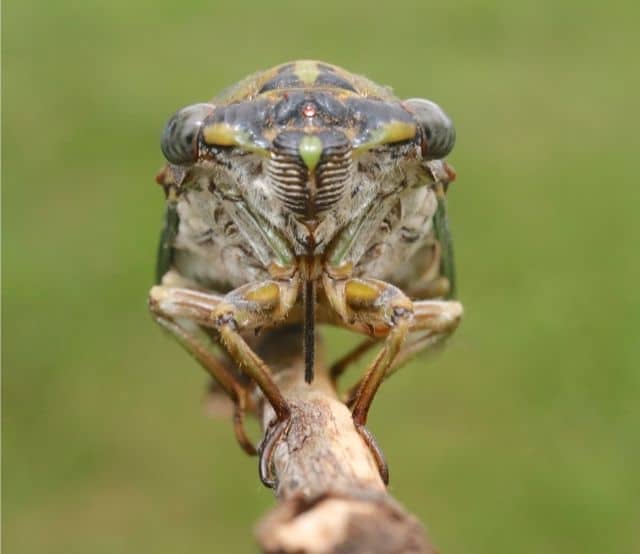
A cicada has a beak (rostrum) that’s used for sucking fluids from plants and trees
It is uncommon, but possible to aggravate one into stabbing you with its beak if you pester it enough or if you keep it in a clenched fist. They don’t have the behavior of stinging and biting insects like hornets and fire ants, so they won’t stab you because they’re territorial or hostile.
They don’t sting—they don’t even have the capability to sting. They are not aggressive insects that act defensively.
Another thing to consider is that those who think they’ve been stabbed by a cicada’s beak may actually have only felt the cicada’s legs. Their legs have sharp claws used for climbing and hanging on to trees and plants. Someone might think they have been stabbed or bitten by a cicada if they feel sharp claws on their skin.
Personally speaking, I have been stabbed by a cicada’s beak, and they do draw blood. While it didn’t hurt badly, it felt like a needle prick. There was no lingering or lasting pain. I believe it only bit me out of curiosity or simple annoyance. I wasn’t holding it. It was merely on the back of my hand.
Are Cicadas Beneficial
Yes, cicadas in Florida are beneficial for a few reasons. They’re great for the ecosystem. The most obvious benefit of cicadas is that they’re a plentiful food source for animals.
Nearly any animal that eats insects will eat cicadas. Many times, insectivorous animals that breed in summer incorporate cicadas into a large part of their diet. In turn, this allows them to breed and feed their young more successfully.
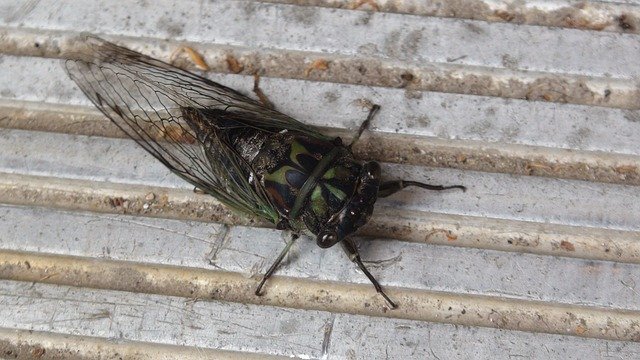
Davis’ southeastern dog-day cicadas are annual cicadas in Florida
For avian predators, cicadas provide nestlings and breeding adults with a protein-rich diet. Most birds will eat adult cicadas, however, some Florida songbirds, owls, and herons will also eat emerging nymphs.
Even underground nymphs benefit tunneling and digging predators such as moles and skunks. Smaller nymphs are also eaten by ants, centipedes, and ground beetle larvae.
Perhaps the most well-known predator is the cicada killer, which is one of the largest wasps. Without cicadas in Florida, Florida cicada killers couldn’t exist. Females hunt and paralyze adult cicadas, dragging them back to their nest burrow. They seal the cicada into a chamber for its larvae to consume when they hatch.
There are other purposes cicadas in Florida serve, too:
- Emerging nymphs benefit the soil by aerating it.
- When adult cicadas die, they fertilize the soil, trees, and plants. This provides nitrogen, which helps plants and trees grow.
- Cicadas also prune healthy, mature trees.
One benefit that may seem more unusual is that some countries, like China, use cicada shells for medicinal purposes. In this traditional Chinese medicine, called Chan Tui, cicada shells are used in medicine made for treating diseases like febrile disease. It’s also claimed to act as a sedative.
Some health issues Chan Tui is said to treat are:
- Sore throat
- Rashes
- Itching skin
- Insomnia
- Blurred vision
- Headaches
- Spasms
- Fevers
- Allergies
- Night terrors
*Note—this entire summary is corrupt, so we’ll need dad to look at this
Takeaway
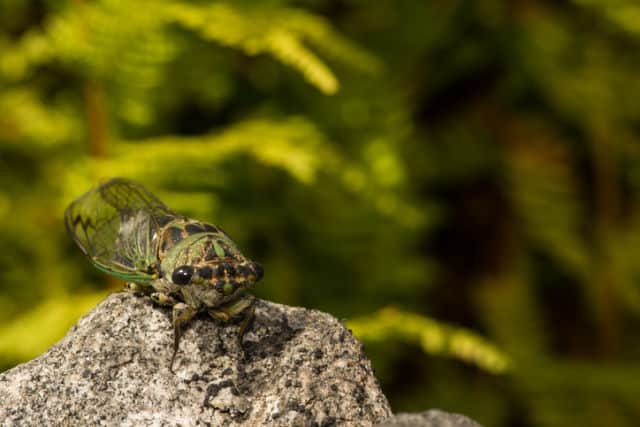
Cicadas in Florida may be loud but they aren’t considered a significant pest
While Florida doesn’t have periodical cicadas, the annual cicadas in Florida are quite interesting insects. We hope we’ve helped you understand them a little bit better and you embrace their droning sounds as the mark of summer.