

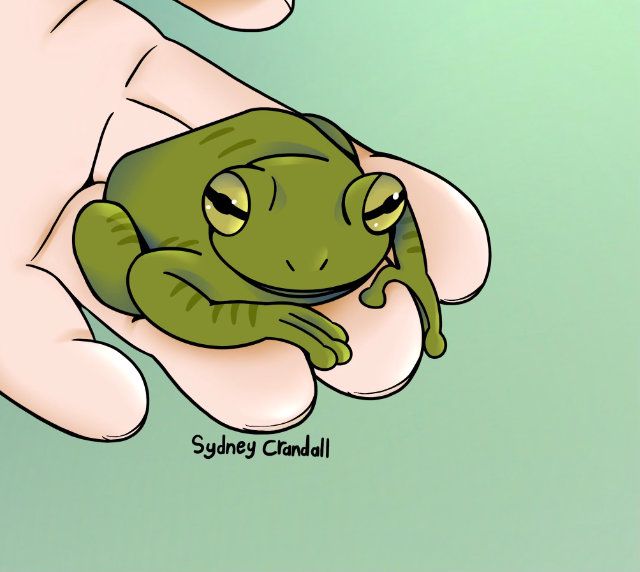
Male Cuban treefrogs sing in hopes of attracting a female during their breeding season, which runs from May through October. If you’ve ever gone outside at night during or after it’s rained, you may notice what sounds like several—or maybe hundreds—creaking floorboards. What you’re likely hearing are Cuban tree frogs. The males may also sing their mating call during the wet season, the hurricane season, or during rainy, humid weather, which is the best time for the females to lay their eggs.
The University of Florida (UF) says Cuban treefrogs are invasive, threaten native tree frogs, can make your pets sick, and may harbor a potentially deadly parasite. Therefore, UF recommends that they should be humanely euthanized. Keep reading to learn more about these pests, why they’re bad and how to exterminate them safely.
Cuban tree frogs in Florida have various damp habitats, including:
- Hardwood hammocks
- Pine forests and rocklands
- Scrubby flatwoods and sandhills
- Cypress and swamp mangroves
- Swamps and river swamps
- Agricultural areas
- Urban and suburban communities
Since 2013, Cuban tree frogs can be found throughout most of Florida, including areas such as Miami, Orlando, Cedar Key, Gainesville, and even Jacksonville. Even the panhandle is seeing an increase in Cuban tree frogs.
Florida isn’t the only state that has these invasive Cuban tree frogs. They are also plentiful in Hawaii.
As well, there are reports of individual Cuban treefrog sightings in Texas, Louisiana, Alabama, Mississippi, Georgia, and coastal South Carolina. Beyond that, they are invasive to the British and US Virgin Islands, Costa Rica, Guadeloupe, Anguilla, and the Turks and Caicos Islands.
How did the Cuban Tree Frog Get to Florida
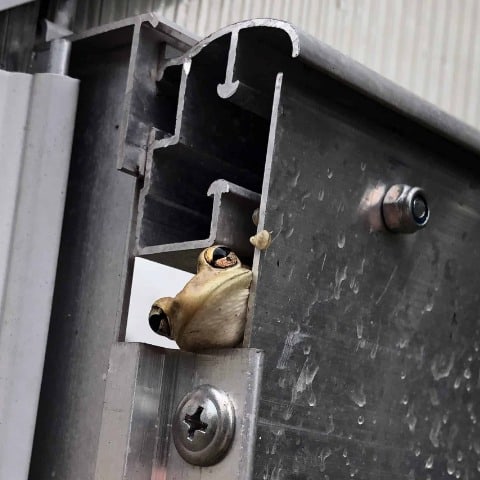
Cuban Treefrogs are good at hiding during the day
The species is native to the Cayman Islands, the Bahamas, and, as the treefrogs’ name implies, Cuba. Despite the fact that Cuban tree frogs have been in Florida for nearly a century, they are not indigenous. They are an introduced invasive species that can permanently change Florida’s ecosystem by altering habitat, threatening native tree frogs, altering biodiversity, and competing for natural resources.
According to UF, these invasive species were possibly introduced here in Florida from the Caribbean as accidental hitchhikers via cargo containers in ships. Their widening spread through the state continues as they stow away on boats, vehicles, ornamental plants, and shipping containers.
Their presence here can be traced back to the 1920s, beginning in the Florida Keys. By the mid-70s, Cuban tree frogs inhabited most of South Florida.
Cuban Tree Frog Life Cycle
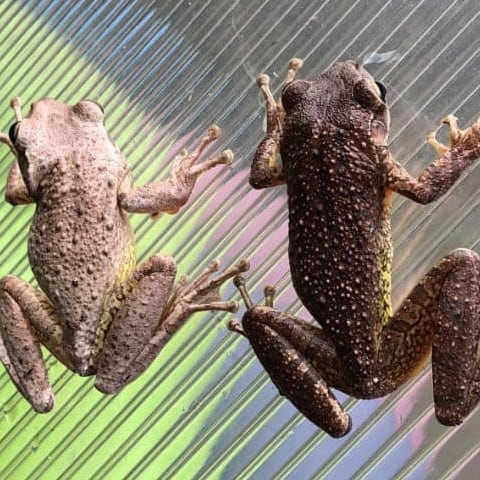
Cuban Treefrogs’ colors are highly variable and patterns vary
North America’s largest treefrogs are the Cuban tree frogs. The egg-laying female has the advantage of being larger and having a longer lifespan than the males of their species—allowing the species the ability to multiply their numbers en masse.
On average, they grow to be 1–4 inches long. Females tend to be larger and live longer than males. Adult Cuban tree frogs are larger than the native treefrogs, which means they are able to easily prey upon them. Cuban tadpoles also outcompete the native treefrog tadpoles.
The following areas are where the female Cuban treefrog prefers to lay her eggs:
- Water retention areas
- Swimming pools
- Fountains
- Shallow waters that lack predator fish
- Isolated wetlands
- Ditches
- Ponds
- Marshes
- Flood pastures
- Any still water, such as puddles
Cuban tree frogs have a polygynandrous mating system, meaning they have multiple breeding mates. This allows the typical-sized females to lay up to 3,000 eggs in a single season— according to Cabi, larger females, which can grow longer than 6 inches, can lay upwards of 15,000 eggs.
Each egg-laying session produces between 75–1,000 eggs each time. Once fertilized by the male, these eggs hatch a day or two later as tadpoles.
About 3 weeks later, they become froglets. 255 days later, the newly adult female is mature and ready to mate. Males mature much earlier and are ready to mate in only 120 days. Adults aren’t territorial and do not defend or provide parental care for their offspring.
Cuban tree frogs are stimulated into breeding during spring and summer rainfall. The type of rain that comes with weather systems associated with thunderstorms, tropical storms, and hurricanes also promote heavy breeding periods.
Mature males also can develop a black nuptial pad (callus) on their thumbs. This is used to their advantage in an amplexus position (the male frog clasping the female frog’s back). This helps him to remain on the female while she is laying eggs. He fertilizes the eggs as they emerge from the female’s cloaca.
This embrace may last for hours to days before the male frog releases her and finds another female to breed with.
Although mate selection is random by the female, the males try to attract a potential mate through vocal competition with other males. By not being selective, the female increases her ability to successfully reproduce abundantly.
Cuban Tree Frog Diet
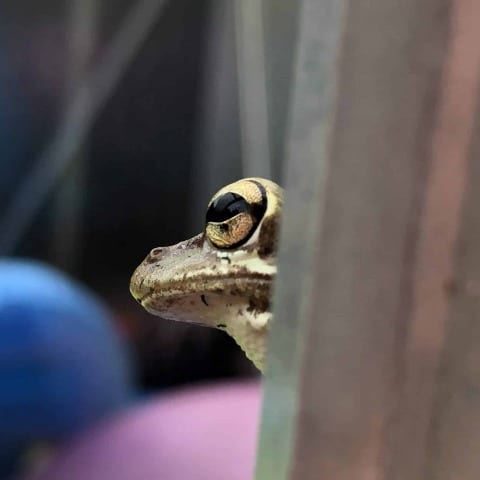
Cuban Treefrogs are carnivores and will eat their own species
The first reason why Cuban tree frogs are bad is due to their diet—which consists of several species of our native treefrogs. They are responsible for the decline in numbers of the following treefrogs:
- Barking treefrog
- Green treefrog
- Pinewoods treefrog
- Squirrel treefrog
*Maybe add some text between these two boxes so they aren’t right on top of each other
They’ll also eat many types of invertebrates, small snakes, lizards, and cannibalize each other. Cuban tree frogs also eat a variety of insects like:
- Moths
- Worms
- House flies
- Cockroaches
- Spiders
- Millipedes
- Snails
They’ll eat just about anything that fits in their mouth, but they prefer a diet of crickets over frogs. Even so, they’re voracious feeders and aren’t too picky if something else comes along.
Cuban treefrogs swallow prey with the help of their eyeballs. The eyelids close and the eyes retract to the back of their mouths during swallowing. This helps push the prey down their throat. Once the prey is swallowed, the eyes return back to their normal position in the sockets.
Cuban treefrogs will compete with our native treefrogs for the many insects that they rely on to eat. Cuban treefrog tadpoles also take up food resources and area, which in turn harms the native treefrog’s chance for survival.
However, luckily for the native treefrogs, black racer snakes, rat snakes, garter snakes, and pigmy rattlesnakes will gladly eat these invasive Cuban tree frogs, as will crows, wading birds, and owls. Bass and bream will also consume their tadpoles. This isn’t enough, however, to effectively put a dent into their population.
They are active from dusk until dawn. The only time they are inactive and not eating is when the temperature drops below 49 degrees.
Are Cuban Tree Frogs Poisonous to Dogs and Cats
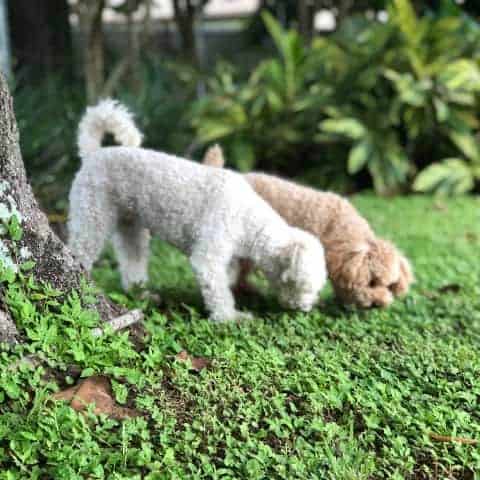
Your pets are predators, and Cuban Treefrogs are prey
Reason number 2 why Cuban tree frogs are bad could be if you own a pet cat or dog. You might be wondering if Cuban tree frogs are poisonous to them. This is especially true for dog owners who may let their dogs outside in their backyard without supervision. Cuban tree frogs release a skin secretion that, for humans, can be extremely irritating to the eyes and nose, but not harmful.
To date, there has been no report of dogs or cats dying from eating Cuban tree frogs—although, there have been reports of pets having had seizures or excessive salivation from interacting with Cuban tree frogs. For pets, the treefrog’s secretions can be very irritating.
It is ill-advised to leave your pet unsupervised outside at night when this invasive species emerges. Dogs and cats don’t understand the consequences of biting or eating Cuban tree frogs.
Cuban Tree Frog in Toilet
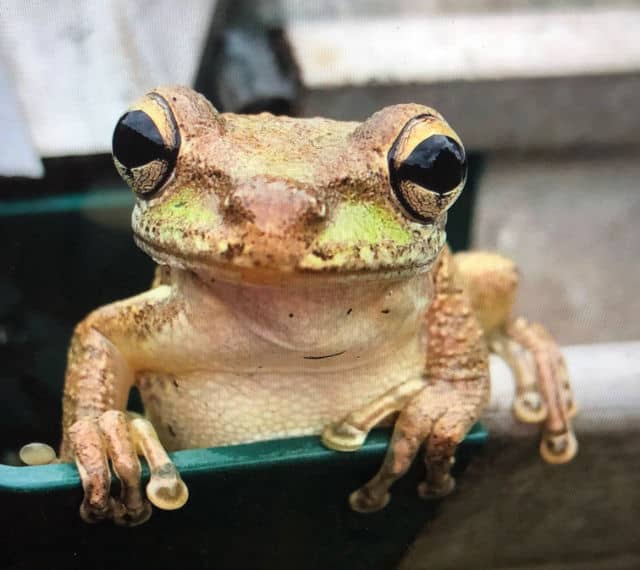
It’s not unusual for Cuban Tree Frogs to hide in the plumbing
In some countries, frogs considered are a symbol of fertility, prosperity, purity, and good luck. Frogs were considered lucky even by the Romans. But I would think the homeowner who lifts the lid of their toilet only to find a pair of big anime eyes staring back at them would feel anything but lucky. That’s right—Cuban tree frogs can indeed be in your toilet.
And if you’re that unfortunate person, then this may be an obvious third reason why Cuban tree frogs are bad. Not only is this gross, but it can be problematic since it can cause clogging. They can even clog sink drains. This happens because they may travel down vent pipes that are on your roof, thus going into the plumbing system.
Other ways Cuban tree frogs can enter your home is by leaping into your home through an open door or window, squeezing through a small opening, or coming in via an ornamental plant. It is an accident in this instance because they are not particularly interested in being there. If you find a Cuban treefrog in your house, don’t panic—keep your pets and children away from it until you can capture it and humanely euthanize it.
Rat Lungworm Florida – Cuban Tree Frog
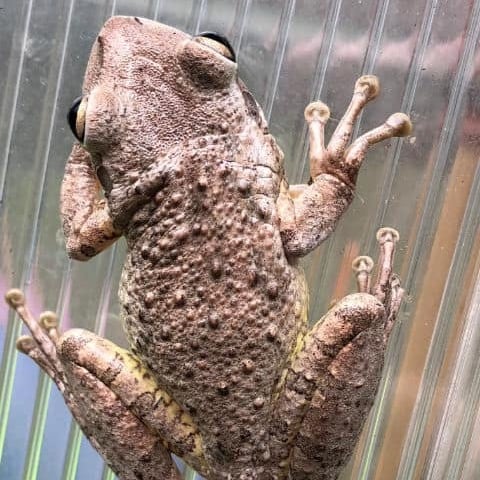
Rat lungworm larvae were found in Cuban Treefrogs’ hind leg muscles
If nothing else in this article has convinced you that Cuban tree frogs are bad, then maybe the fourth reason will.
Angiostrongyliasis, also known as rat lungworm, is an infectious disease that has recently been observed in Florida’s Cuban tree frogs. The UF tested several Cuban tree frogs from Volusia county and has confirmed the presence of the disease through quantitive polymerase chain reaction (PCR) testing. Researchers stress that these findings should be taken seriously.
What is rat lungworm? It’s a potentially fatal disease that comes from the Angiostrongylus cantonensis, a roundworm parasite nematode. The nematode has many hosts, one of which is the invasive Cuban treefrog. Cuban tree frogs can become infected by ingesting the nematode larvae by eating a host, such as a snail.
According to the UF, rat lungworm symptoms in adult humans consist of:
- Fever
- Nausea
- Vomiting
- Stiff neck
- Headaches
- Paralysis of the face and limbs
Human complications may include a rare form of meningitis called eosinophilic meningitis, blindness, or brain damage. It can even cause coma and death in some cases.
Means of infection may be as simple as having Cuban treefrog feces on home-grown fruits and vegetables. Other ways you can become infected might be if you were to eat Cuban tree frogs.
This also comes as alarming news for pet owners. This means that dogs can possibly become infected by eating an infected Cuban treefrog. Symptoms include weakness and paralysis of the rear limbs and hind legs, respectively. Fortunately, though, there are no reports in Florida as of this writing that neither dogs nor cats have become infected with the nematode.
Cuban Tree Frog Control Methods (Humane)
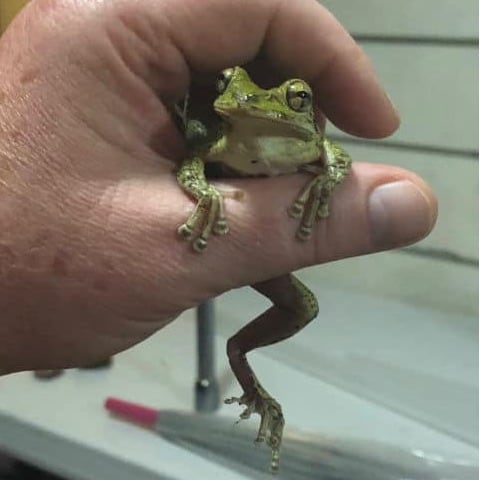
Cuban Treefrogs are cute, but they’re still an invasive species
After hearing all these reasons why Florida’s Cuban tree frogs have a harmful impact on our ecosystem, our pets, our health, and perhaps our sanity, some might be looking for ways to euthanize or control these invasive amphibians. According to the University of Florida, there is only one effective way to humanely euthanize the Cuban treefrog.
To humanely euthanize Cuban tree frogs, you’ll need the following supplies:
- Protective gloves
- Sealable plastic bag
- Benzocaine products that contain 20% benzocaine (inexpensive, generic brands are fine):
- benzocaine ointment
- toothache gel
- sunburn relief
- first aid spray
*Maybe add some text between these boxes to give some space
First, be sure to properly identify the treefrog you plan to euthanize, being certain that it is a Cuban treefrog and not one of Florida’s native treefrogs. Be sure to follow these 7 steps to humanely euthanize the Cuban treefrog once you’ve caught it:
- Put on protective gloves.
- Place the captured treefrog into a plastic, sealable bag.
- Smear a generous amount of 20% benzocaine to its back or belly. Be careful to avoid the tree frog’s eyes as the benzocaine might burn them.
- Seal the plastic bag, being careful not to let the treefrog escape.
- As an added precaution, place the bagged, comatose treefrog into the freezer overnight.
- The following morning, check to be certain that the treefrog is dead.
- Discard the dead treefrog into the trash, leaving it inside the plastic bag.
Shortly after the benzocaine has been applied, the treefrog will be in a stunned state, become comatose, and should succumb within a few minutes. The UF recommends that you further ensure that the bagged Cuban treefrog is dead by placing it into the freezer. The use of benzocaine will prevent the treefrog from experiencing any pain.
Others have recommended euthanizing invasive Cuban treefrogs by:
- Boiling them—this is inhumane because they feel everything up until death.
- Putting salt on them—this dehydrates them and makes them uncomfortable until death.
- Putting citric acid on them—this burns their skin and makes them suffer until death, which may be prolonged for minutes.
- Blunt force trauma—this must be performed exactly right or the Cuban treefrog will suffer.
You should not attempt to euthanize Cuban tree frogs in an inhumane manner. Despite being pests, they are also living creatures that can experience pain. All of these above methods that are recommended by others are not approved by the UF.
If you can’t bring yourself to humanely euthanize these Cuban tree frogs, then you can simply keep it as a pet. Although, you should be aware you legally can not re-release them back into the wild once you’ve made the decision. At any point that you no longer wish to keep your Cuban treefrog as a pet, it will need to be humanely euthanized, following the University of Florida’s recommendations.
Find out how to keep Cuban tree frogs as pets here. Alternatively, you can just coexist with them. Ignore them, and monitor your pets and children to keep them from interacting with the treefrog.
*Maybe replace this frog with our original feature image frog photo—the one that you’re holding
Final Thoughts
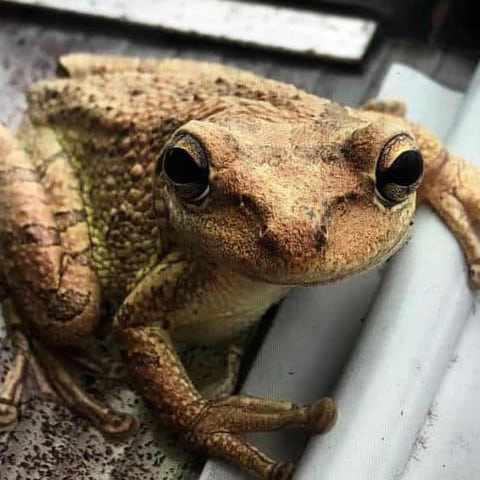
Love Cuban treefrogs or hate them? *potentially change this caption
Cuban treefrogs are now the most dominant treefrog in suburban areas. They’re harmful to the native ecosystem. They can leave large egg masses in unwanted areas, like your pool, birdbath, or rain barrels. Although they are considered arboreal, meaning that they live up in the tree canopies, they may take shelter in outside PVC pipes, sidings, shutters, birdhouses, and even in wind chimes.
Their presence is often responsible for costly power outages by short-circuiting utility switches. They have also been responsible for short-circuiting homes because they get into AC units.
Their skin secretions can irritate the eyes and nose for hours. They’re not good for your pets and can possibly make you sick.
For many Floridians, they are noisy, disruptive in nature, and problematic. If you have children, pets, or have a garden, you may feel threatened by the rat lungworm disease that they can carry and wish to humanely euthanize them. You may simply dislike them popping up in your toilet. Or, maybe you don’t care and coexist with them.
Whatever your decision is on how to handle this invasive species, we hope this article has helped to enlighten you about Florida’s Cuban treefrogs, the problems that they cause, and why it is recommended that they be captured and be humanely euthanized.