


How common are alligators in Florida? This article looks at the common presence of alligators in Florida and why alligator safety is important. Alligators are a fascinating and iconic species that are native to Florida, and they have been present in the state for millions of years.
Alligators are very common in Florida! Here are some quick facts:
- There are an estimated 1.3 million alligators in Florida.
- They can be found in freshwater and saltwater habitats.
- Alligators have a powerful bite and can grow up to 14 feet long.
- They are an important part of Florida’s ecosystem.
- It’s important to be cautious around alligators and follow safety guidelines.
In the past, alligator populations in Florida were threatened due to hunting and habitat destruction. However, through conservation efforts, alligator populations have rebounded, and they are now considered a conservation success story. In fact, Florida is home to the largest alligator population in the United States, with an estimated 1.3 million alligators living in the state.

While alligators are an important part of Florida’s natural ecosystems, they can also pose a threat to human safety if not properly respected. Alligator attacks are rare, but they can occur, and it’s essential to understand how to coexist safely with these animals.
In this blog post, we will discuss the prevalence of alligators in Florida and provide tips on how to stay safe while enjoying the state’s natural beauty. We will cover information such as where alligators can be found, how to identify their presence, and what to do if you encounter one.
By understanding alligator safety, you can reduce the risk of dangerous encounters with these fascinating creatures. We hope that this blog post will provide you with valuable information and help you feel more confident while enjoying Florida’s beautiful outdoors.
So, whether you are a Florida resident or a visitor to the state, let’s explore the world of alligators together and learn how to safely coexist with these amazing creatures.
Alligator Behavior: An Overview of Their Habits
Alligators are fascinating creatures that are native to the wetlands of Florida. These large reptiles are known for their sharp teeth, powerful jaws, and distinct bellowing sound. But what are some of the behaviors that make alligators unique?
Alligators are most commonly found in the wetlands and swamps of Florida, but they can also be found in other parts of the southeastern United States. In Florida, alligators can be found in both freshwater and brackish water habitats. They are cold-blooded animals and rely on external sources of heat to regulate their body temperature.
Alligators mate in the spring, typically in April or May. During this time, male alligators will bellow loudly to attract females. Once they have found a mate, the female will construct a nest made of vegetation and mud in a secluded area, typically near water. She will lay her eggs in the nest, which will incubate for about 65 days before hatching.
Alligators are opportunistic feeders and will eat a variety of prey, including fish, turtles, birds, and mammals. They are also known to scavenge on dead animals. Alligators have powerful jaws that can crush the shells of turtles and the bones of other prey.
Alligators are cold-blooded animals, which means that they rely on external sources of heat to regulate their body temperature. They bask in the sun to warm up, and they will move to cooler areas or into the water to cool down. Alligators can also regulate their body temperature by changing their behavior, such as by adjusting their position in the water or by opening their mouths to release heat.
Alligators are adaptable animals and can be found in both urban and rural areas. However, their behavior can be different depending on their habitat. Alligators in urban areas may be more used to humans and can become habituated to people, which can be dangerous. In rural areas, alligators may be more wary of humans and avoid contact.
Alligator behavior is shaped by their environment and biology. Understanding their behavior is key to living safely with these amazing creatures. Remember to always keep a safe distance from alligators and respect their space, and they will continue to thrive in the wetlands of Florida.
Alligator Safety Tips: How to Stay Safe Around These Fascinating Creatures
Alligators are a sight to behold, it is important to understand how to stay safe around them. Alligator attacks can be deadly, so it is important to be aware of the risks and take steps to minimize them. In this article, we will cover some essential alligator safety tips to help you stay safe.
Why Alligator Safety is Important
Alligator safety is important because alligators are large, powerful predators that can be dangerous to humans. While alligator attacks are relatively rare, they do happen, and the consequences can be severe. It is also important to note that alligators are a protected species, and it is illegal to harm, feed, or harass them in any way. So, staying safe around alligators is not only important for your own safety, but also for the protection of these amazing creatures.
Overview of Alligator Safety Tips
Here are some essential alligator safety tips to keep in mind:
- Never feed alligators.
- Keep a safe distance.
- Do not swim in areas where alligators are present.
- Keep pets on a leash and away from the water’s edge.
- Do not approach alligators, especially during the mating season.
- In-depth Explanation of Each Safety Tip and How to Implement It
Never feed alligators: Feeding alligators can make them associate humans with food, which can lead to dangerous situations. In addition, it is illegal to feed alligators in most areas.
Keep a safe distance: Alligators can move very quickly, so it is important to keep a safe distance at all times. The general rule is to stay at least 50 feet away from alligators.
Do not swim in areas where alligators are present: Alligators are most active during the warmer months, so it is important to be cautious when swimming in areas where they are present. Always obey posted signs and stay out of the water if alligators are present.
Keep pets on a leash and away from the water’s edge: Pets can be easy targets for alligators, so it is important to keep them on a leash and away from the water’s edge.
Do not approach alligators, especially during the mating season: Alligators can be very aggressive during the mating season, which typically runs from April to June. It is important to stay away from alligators during this time.
There have been many stories of alligator attacks over the years. One of the most famous is the 2016 attack on a two-year-old boy at Walt Disney World. The boy was playing near the water’s edge when an alligator grabbed him and pulled him into the water. The boy’s father tried to fight off the alligator but was unable to save his son.
This tragedy underscores the importance of alligator safety tips. If the family had been aware of the risks and followed the safety tips outlined above, this tragedy could have been avoided. So, if you are planning to visit an area where alligators are present, be sure to educate yourself on the risks and take steps to stay safe.
Living With Alligators In Residential Areas
You may wonder, ‘how common are alligators in Florida residential areas?’ The answer depends on the proximity of homes to bodies of fresh water.
Living in areas near alligators can be a unique experience. However, when humans and alligators share the same space, there can be some challenges to overcome.
Because alligators are freshwater animals and can be found in rivers, lakes, swamps, and marshes. In residential areas, they may be attracted to bodies of water, such as retention ponds or even swimming pools, that are located on or near the property.
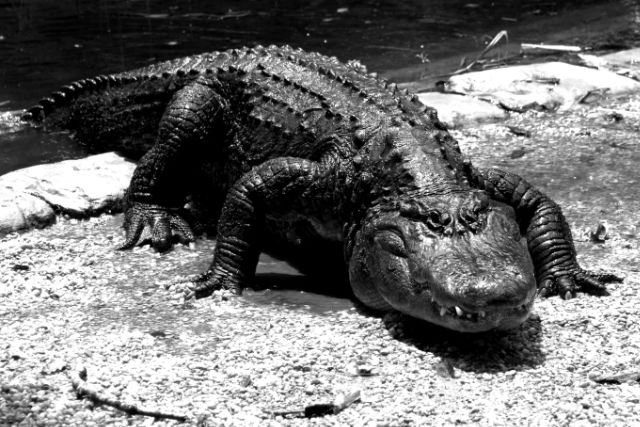
The biggest alligator ever found in Florida was 17 ft. 5 in. and the heaviest ever caught was 1,043 pounds
One of the challenges of living near alligators is the potential for human-alligator conflict. Alligators are wild animals and can be dangerous if they feel threatened or provoked. However, there are also benefits to living near alligators. They can help control the population of other animals and keep ecosystems in balance.
To reduce the risk of attracting alligators to your property, it is important to make sure that all potential food sources are secured. This means not leaving pet food outside, securing garbage cans, and not feeding wildlife. It is also important to remove any standing water on your property, as this can attract alligators.
In most states, it is illegal to feed alligators or approach them within a certain distance. If you encounter an alligator on your property, it is important to contact local wildlife officials to safely remove the animal. It is also important to educate yourself and your family about alligator safety and what to do if you encounter one.
By understanding alligator behavior and taking steps to reduce the risk of attracting them to your property, you can coexist with these fascinating creatures. Remember to always prioritize safety and contact local wildlife officials if you encounter an alligator on your property.
Alligator Removal And Control
Knowing how common alligators are in Florida, it’s vital to understand methods of alligator removal and control.
Alligators can be a nuisance or even dangerous in certain situations. Fortunately, there are ways to remove or control alligators to minimize these risks.
Alligators are typically removed or controlled in situations where they pose a threat to humans or pets. For example, if an alligator is spotted in a residential area, near a school, or in a public park, authorities may need to intervene to prevent any harm. Additionally, if an alligator is causing damage to property or livestock, removal or control may be necessary.
Alligator removal and control is typically done by licensed professionals who have the training and equipment to safely handle these animals. In most cases, alligators are captured using traps or snares, and then relocated to a safe and appropriate location.
There are a few different methods that professionals may use to remove or control alligators. One common method is to set baited traps, which are designed to lure in the alligator and then trap it safely. Another method is to use snares or nooses, which can be used to capture alligators on land or in water.
In some cases, professionals may need to use more extreme methods to remove or control alligators. For example, if an alligator is particularly aggressive or poses a significant threat to public safety, they may need to be euthanized. However, this is typically a last resort and is only done when absolutely necessary.
Alligator removal or control is necessary in situations where these animals pose a threat to humans or pets. Alligators are wild animals and can be unpredictable, so it’s important to take precautions to minimize the risk of harm.
In addition to the risk of physical harm, alligators can also cause property damage. For example, they may damage docks, boats, or other waterfront structures. If left unchecked, alligator populations can also grow and become more of a threat over time.
While alligator removal may be necessary in certain situations, it’s important to consider the potential consequences of these actions.
Here are some of the potential impacts of alligator removal or control:
- Disrupting the ecosystem: Alligators are an important part of the local ecosystem and play a role in maintaining balance in the food chain. Removing or controlling alligators can disrupt this balance and have unintended consequences on other wildlife in the area.
- Economic impacts: Alligator hunting and tourism are important industries in some areas, and removing or controlling alligators could have negative economic impacts on these communities.
- Public perception: Alligators are a beloved symbol of the southern United States, and removing or controlling them could be seen as controversial or unpopular among some segments of the population.
- Increased population of other species: Removing alligators could lead to an increase in the population of other species that were previously kept in check by the alligators. This could lead to unintended ecological consequences.
- Risk of injury or death: Removing or controlling alligators is a dangerous task, and there is always a risk of injury or death to the people involved in these activities.
Here are some of the potential impacts of alligator removal or control:
- Disrupting the ecosystem: Alligators are an important part of the local ecosystem and play a role in maintaining balance in the food chain. Removing or controlling alligators can disrupt this balance and have unintended consequences on other wildlife in the area.
- Economic impacts: Alligator hunting and tourism are important industries in some areas, and removing or controlling alligators could have negative economic impacts on these communities.
- Public perception: Alligators are a beloved symbol of the southern United States, and removing or controlling them could be seen as controversial or unpopular among some segments of the population.
- Increased population of other species: Removing alligators could lead to an increase in the population of other species that were previously kept in check by the alligators. This could lead to unintended ecological consequences.
- Risk of injury or death: Removing or controlling alligators is a dangerous task, and there is always a risk of injury or death to the people involved in these activities.
It’s important to carefully consider these potential consequences before deciding to remove or control alligators. In many cases, there may be alternative methods of managing alligator populations that are less disruptive to the ecosystem and have fewer unintended consequences. If you encounter an alligator in your area, it’s best to contact a licensed professional to help you determine the best course of action.
Alligator Conservation And Protection
Given how common alligators are in Florida, conservation and protection measures are critical.
Alligators are an iconic species of Florida, and it’s no surprise that efforts have been made to conserve and protect them. In this blog section, we’ll cover the current state of alligator conservation in Florida, the history of alligator hunting, and the impact of human development on alligator populations and behavior.
Florida has been home to alligator conservation efforts for many years. The state’s alligator management program has been active since the 1970s and has helped to increase alligator populations while also providing opportunities for sustainable hunting. The program focuses on monitoring alligator populations, researching alligator behavior, and enforcing regulations to protect alligators.
Alligator hunting has been a part of Florida’s history for a long time. However, due to unregulated hunting, alligator populations were greatly reduced by the early 1900s. In 1967, alligators were listed as an endangered species, and hunting was prohibited. In the 1980s, alligator hunting was reintroduced as a way to manage alligator populations, while also creating economic opportunities for hunters and the state.
Human development has had a significant impact on alligator populations and behavior. Alligators need wetlands to survive, but the destruction of wetlands for urbanization and agriculture has reduced their habitat. This has led to alligators being forced into residential areas, which can result in conflicts with humans. In addition, human interaction can cause alligators to lose their natural fear of humans, which can lead to dangerous situations.
To protect alligators from human development, the state of Florida has implemented regulations to limit development in certain areas and also created programs to restore wetlands. Additionally, the Florida Fish and Wildlife Conservation Commission has established guidelines for interacting with alligators, including not feeding them and keeping a safe distance.
Alligator conservation and protection is an important issue in Florida. Through management programs and regulations, alligators have been able to thrive in the state while also providing economic opportunities for hunters. By working together, we can ensure the long-term survival of this iconic species.
Alligator Attacks and Safety Precautions
Understanding how common alligators are in Florida can help individuals be prepared and take necessary safety precautions
If you live here in Florida, or if you’re planning a trip here, you’ve likely heard about alligator attacks. These reptiles are usually not aggressive, however it’s important to understand the risks and take necessary precautions to avoid any potential danger.
Despite their fearsome reputation, alligator attacks on humans are actually quite rare. According to the Florida Fish and Wildlife Conservation Commission (FWC), there have been 401 confirmed alligator attacks in Florida between 1948 and 2021, with 25 resulting in fatalities.
Alligator attacks can be incredibly dangerous, and can result in serious injury or even death. Alligators are incredibly powerful, and their bite can cause significant damage. In addition to physical injury, alligator attacks can also lead to emotional trauma, and it’s not uncommon for survivors to experience post-traumatic stress disorder (PTSD).
Considering how common alligators are in Florida, it’s important to know what to do in the unlikely event of an attack.
If you encounter an alligator, it’s important to remember that they are wild animals and should be treated with caution. The following steps can help minimize the risk of an alligator attack:
Stay away from the water’s edge – Alligators are typically found in or around bodies of water, so be aware of your surroundings and keep a safe distance.
Do not feed alligators – Feeding alligators can cause them to associate humans with food, and may increase the risk of an attack.
Keep pets on a leash – Small animals, such as dogs, may be mistaken for prey by alligators, so it’s important to keep them under control.
Back away slowly – If you encounter an alligator on land, slowly back away from the animal while keeping an eye on its movements.
Fight back – If an alligator attacks, fight back by hitting or kicking it in the sensitive areas such as its nose or eyes.
If you are bitten by an alligator, seek medical attention immediately. Alligator bites can be incredibly dangerous and can lead to serious infections. In addition, alligator saliva contains a large amount of bacteria that can lead to sepsis or other serious medical conditions.
Alligator attacks are a rare but real danger in Florida. By taking appropriate precautions and understanding the risks, you can minimize the likelihood of an attack. If you do encounter an alligator, remember to stay calm and take appropriate action to protect yourself. And if you are bitten, seek medical attention right away to ensure the best possible outcome.
Alligator Myths
How common are alligators in Florida? This question often gives rise to several myths and misconceptions.
Alligators have been the subject of many myths and misconceptions. These myths can lead to dangerous misunderstandings about alligators and their behavior. In this blog section, we will discuss some common myths and misconceptions about alligators and shed light on the truth behind them.
One common myth about alligators is that they are aggressive and will attack humans on sight. While it is true that alligators are large and powerful predators, they are generally not interested in humans as prey. Alligator attacks on humans are rare and usually occur when humans get too close to the alligator’s territory or inadvertently provoke the alligator. Alligators are most dangerous when they feel threatened or cornered, so it’s important to give them plenty of space and respect their natural habitat.
Another myth about alligators is that they are slow-moving and clumsy on land. In reality, alligators can move quickly on land, especially over short distances. Alligators have powerful legs and can sprint up to 11 miles per hour for short bursts. This means that it’s important to never underestimate an alligator’s speed or agility, and to always keep a safe distance from them.
Some people also believe that alligators are dumb or have small brains. This is simply not true. Alligators have large brains relative to their body size, and they are highly intelligent animals. They have complex social structures, communicate with each other using a range of vocalizations, and have been known to use tools in the wild. Alligators also have impressive memories and can recognize individual humans that they have encountered before.
Finally, some people believe that alligators are easy to keep as pets or to raise in captivity. This is a dangerous misconception, as alligators are wild animals that require specialized care and habitats. Keeping an alligator as a pet is illegal in many places, and even where it is legal, it is not recommended. Alligators can grow to be several feet long and require large amounts of space and food to survive. They also have specific environmental needs that are difficult to replicate in captivity.
Understanding the truth about alligators and dispelling common myths and misconceptions about them is important for our safety and the conservation of these magnificent creatures. By respecting alligators’ natural habitat, keeping a safe distance from them, and educating ourselves and others about their behavior, we can coexist with these apex predators in a way that is both safe and sustainable.
How Common Are Alligators In Florida
It’s important to understand how common alligators are in Florida, as this knowledge can contribute to their conservation.
Alligators are a vital part of Florida’s natural environment, and understanding their behavior and habitat is crucial for our safety and their conservation. By implementing alligator safety tips and supporting alligator conservation efforts, we can coexist safely with these amazing creatures and help to protect their habitats for future generations. Let’s work together to ensure that alligators and other wildlife continue to thrive in Florida’s beautiful natural landscapes.
There are many wildlife tours in Florida that offer the opportunity to observe alligators in their natural habitats:
| Tour Company | Location | Description |
| Everglades National Park Boat Tours | Everglades National Park | Offers guided boat tours that provide views of alligators and other wildlife in the Everglades |
| St. Augustine Alligator Farm | St. Augustine | A wildlife park that features a variety of alligators and crocodiles, as well as educational shows |
| Sawgrass Recreation Park | Weston | Offers airboat tours of the Everglades, which provide the opportunity to see alligators in their natural habitats |
| Gatorland | Orlando | A wildlife park that features a variety of alligators and crocodiles, as well as zip line and animal shows |
| Myakka River State Park | Sarasota | Offers boat tours that provide views of alligators and other wildlife in the park |
| Billie Swamp Safari | Clewiston | Offers airboat tours and swamp buggy tours that provide views of alligators and other wildlife in the Everglades |
| Wild Florida | Kenansville | Offers airboat tours, wildlife drive-through tours, and animal shows, which provide the opportunity to see alligators and other wildlife |
There are several alligator-watching boardwalks and observation decks in Florida:
| Location | Name of Observation Deck or Boardwalk | Description |
| Everglades National Park | Anhinga Trail | A 0.8-mile boardwalk that provides views of alligators, as well as other wildlife in the park. |
| Shark Valley | Shark Valley Observation Tower | A 65-foot observation tower that provides panoramic views of the Everglades and the opportunity to spot alligators. |
| Big Cypress National Preserve | Loop Road | A scenic drive that provides the opportunity to view alligators in their natural habitats, as well as other wildlife in the preserve. |
| Loxahatchee National Wildlife Refuge | Cypress Swamp Boardwalk | A 0.4-mile boardwalk that winds through a cypress swamp, providing the opportunity to view alligators and other wildlife. |
| Merritt Island National Wildlife Refuge | Black Point Wildlife Drive | A 7-mile drive that provides the opportunity to view alligators, as well as other wildlife in the refuge. |
| Lake Apopka Wildlife Drive | Lake Apopka Wildlife Drive | A 12-mile drive that provides the opportunity to view alligators, as well as other wildlife in the area. |
| J.N. Ding Darling National Wildlife Refuge | Wildlife Drive | A 4-mile drive that provides the opportunity to view alligators, as well as other wildlife in the refuge. |
It’s important to always keep a safe distance from alligators, and to respect their natural habitats by avoiding any behavior that could provoke or harm them. By visiting these observation decks or boardwalks, visitors can have a safe and educational experience observing alligators in their natural environments.
Watching alligators can be an exciting and educational experience, but it’s important to always prioritize safety and respect their natural habitats. Here are some tips on how to safely watch alligators and what equipment to use to stay a safe distance:
- Binoculars: Binoculars can be a useful tool for safely observing alligators from a distance. They allow you to get a closer look without getting too close to the alligator.
- Telephoto lens: If you’re interested in taking photographs of alligators, a telephoto lens can allow you to capture close-up shots from a safe distance.
- Observation deck or boardwalk: Many parks and nature reserves have observation decks or boardwalks that provide a safe and elevated view of alligators in their natural habitats.
- Wildlife tours: Consider taking a guided wildlife tour, where experienced guides can safely lead you to areas where alligators can be observed from a safe distance.
- Keep a safe distance: It’s important to keep a safe distance of at least 60 feet from alligators to avoid any dangerous situations. If an alligator begins to approach you, calmly and slowly back away.
- Observe from a safe location: Alligators are most active during dusk and dawn, so it’s important to observe them from a safe location during daylight hours.
- Don’t feed or provoke alligators: Feeding or provoking alligators is not only illegal, but can also be dangerous and cause them to lose their natural fear of humans.
Takeaway
Given how common alligators are in Florida, keeping an eye of caution open when you are in areas they inhabit is important.
So, how common are alligators in Florida? Well, alligators are quite prevalent in Florida and it is important to keep an eye of caution open when you are in situations or areas where they inhabit. While they are fascinating to watch, they are unpredictable and very, very dangerous.
Encounters with alligators in Florida are not uncommon, as these creatures are native to the state and often live in areas close to bodies of water. Here are some documented experiences from Floridians who have encountered alligators in their neighborhoods or at resorts in the state:
In 2020, a Florida woman was walking her dog in her neighborhood when an alligator jumped out of a pond and attacked her dog. The woman was able to fend off the alligator and save her dog, but both sustained injuries and were taken to a nearby hospital for treatment.
In 2019, a Florida man was fishing in a pond at a resort in Orlando when an alligator suddenly appeared and attacked him. The man was able to fight off the alligator and escape with minor injuries, but the resort was subsequently closed for several hours while wildlife authorities searched for the alligator.
In 2018, a Florida family was vacationing at a resort in Kissimmee when they saw an alligator in the pool area. The family immediately reported the alligator to resort staff, who safely removed the alligator from the area.
In 2017, a Florida man was kayaking in a canal near his home when an alligator suddenly attacked his kayak. The man was able to escape with minor injuries and quickly reported the incident to wildlife authorities, who safely removed the alligator from the area.
In 2016, a Florida man was walking his dog in his neighborhood when an alligator suddenly appeared and attacked his dog. The man was able to fend off the alligator and save his dog, but both sustained injuries and were taken to a nearby hospital for treatment.
These documented experiences highlight the importance of being aware of alligators and their behavior, and taking necessary precautions to avoid dangerous encounters. It’s crucial to always keep a safe distance from alligators, avoid feeding or provoking them, and immediately report any sightings or concerns to the wildlife authorities. By following these guidelines, we can coexist safely with these amazing creatures and protect their natural habitats.