
Extreme Weather Events
Florida’s Weather Extremes: Lightning, Sinkholes, Tornadoes, Floods, Wildfires
Explore the intensity and unpredictability of phenomena like lightning, sinkholes, tornadoes, floods, and wildfires that characterize the wild side of the Sunshine State’s climate.
Lightning
Central Florida, particularly the Tampa Bay area, is often referred to as the “Lightning Capital of the U.S.” Lightning poses serious risks, both to people and property.
University Of Florida Lightning Research Group (UF LRG)
- The University of Florida Lightning Research Group (UF LRG) is one of the leading lightning research groups in the world.
- The UF LRG has made significant contributions to our understanding of lightning, including the development of new methods for detecting and tracking lightning.
- The group’s research has also helped to improve lightning safety measures, such as the development of lightning rods and early warning systems.
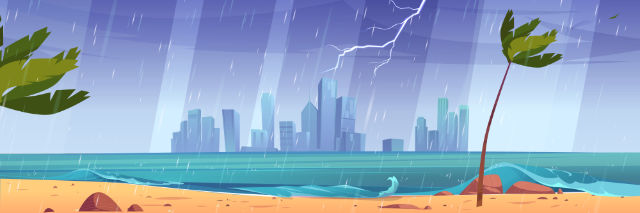
Florida has the most cloud-to-ground lightning strikes per year
Averaging over 1.2 million lightning strikes, Florida is often referred to as the “lightning capital” of the United States. This title is due to Florida’s unique geographical position between the Atlantic Ocean and the Gulf of Mexico, creating the perfect conditions for thunderstorm formation, especially in the summer months.

Central Florida's karst terrain prone to sinkholes
Three Central Florida counties—Hernando, Pasco, and Hillsborough—are often referred to as “Sinkhole Alley” because of the frequency of sinkhole events there. These events are caused by landscapes underlain by limestone that has been eroded by dissolution, producing ridges, towers, fissures, sinkholes, and other characteristic landforms.
Sinkholes
Florida’s geology makes it prone to sinkholes. They form when the ground collapses into cavities in the underlying bedrock.
Florida averages 300-400 sinkholes each year, the most in the U.S.
- Sinkholes can form suddenly or gradually over time.
- The most sinkhole-prone areas in Florida are in the central region, on the ‘Sinkhole Alley’.
- Look for warning signs such as sagging trees or fences, sudden ponding of water, and doors or windows that no longer close properly.
- Have your property inspected if you notice these signs.
- Consider sinkhole insurance.
Tornadoes
Tornadoes are violently rotating columns of air that can cause devastating damage. Florida experiences both supercell tornadoes and waterspouts.
Florida tornado facts
- Florida ranks third in the country for tornado frequency.
- Florida is one of the most tornado-prone states in the United States. It leads in the number of tornadoes per square mile.
- Tornadoes in Florida are more likely to occur from February through April.
- Central Florida Tornado Alley is a region in Central Florida, extending from Tampa Bay to the Orlando and Melbourne areas due to high number of tornadoes
- Florida tornadoes are typically less intense than those observed in the Midwest. Most Florida tornadoes are categorized as EF-0 or EF-1 on the Enhanced Fujita scale, which measures tornado strength based on damage.
-
Tornadoes often accompany hurricanes and tropical storms. As these weather systems move over land, the atmospheric instability can trigger tornadoes.

Central Florida radar hole presents some risk
Florida’s early warning systems for tornadoes, is multi-faceted and employs a combination of technologies and communication methods to alert residents of impending severe weather.
However, even with these systems in place, there can be gaps in radar coverage, commonly referred to as “radar holes.”
Because of the Earth’s curvature, the radar beam at far-away locations can be too high to effectively detect low-level rotation in tornadoes for Ocala and Marion County.

Driving on flooded Florida roads and other hazards
One of the most dangerous actions during a flood is attempting to drive through floodwaters. The water’s depth and current can be misleading, and it only takes about 12 inches of moving water to float a small car. If you come upon a flooded road, the safest decision is always to turn around.
Other flood hazards include electrical, contaminated water, structural damage and health risks such as injuries and infectious diseases.
Flooding
As a low-lying state with an extensive coastline, Florida is highly susceptible to flooding, particularly during the hurricane season.
Florida floods can be swift and devastating
- Flooding can result from heavy rains, storm surges, or a combination of both.
- Flash floods can occur within minutes or a few hours of excessive rainfall.
- The rainy season in Florida, from May to October, is particularly prone to flooding events.
- Hurricanes and Tropical Storms often bring heavy rainfall and storm surges, which can lead to extensive coastal and inland flooding.
- During El Niño events, Florida tends to experience more rainfall, which can increase the risk of flooding.
Wildfires
Wildfires can occur in Florida throughout the year, but are most common during periods of drought and low humidity.
Florida wildfire facts
- Florida experiences an average of 3,000 wildfires each year.
- Wildfires can move as fast as 14 miles per hour and can change direction quickly.
- Many of Florida’s ecosystems, such as pine flatwoods and scrublands, are adapted to fire and depend on it for regeneration and growth. As a result, fire, including wildfires, is a common occurrence in Florida.
- Florida’s primary wildfire season is from December to April when the weather is typically drier and windier. However, wildfires can occur throughout the year under the right conditions.
- Florida uses prescribed fire as a tool more than any other state. This controlled burning reduces the accumulation of combustible vegetation and helps prevent larger, more destructive wildfires.
- Florida reports more wildfires annually than any other state in the southeastern U.S. On average, Florida sees around 2,500 wildfires each year.
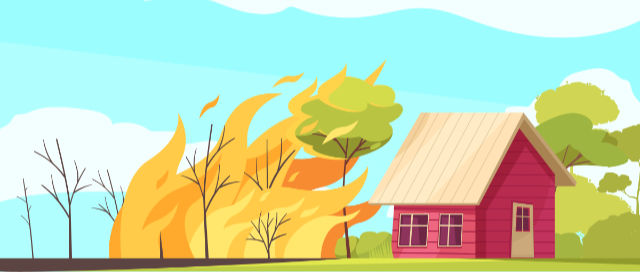
Florida is often in the Top 10 states for wildfires in the U.S.
Florida’s unique geography, climate, and ecosystems make it particularly susceptible to wildfires. With a mix of long dry spells, frequent lightning strikes, and large areas of fire-adapted ecosystems, the Sunshine State faces a consistent risk of wildfires.
A significant portion of wildfires in Florida are sparked by human activity, such as debris burning, accidental sparks from equipment, or even arson. Lightning strikes, common during Florida’s stormy summer months, also ignite many fires. These risks are significantly increased during periods of drought and high wind conditions, which can rapidly accelerate the spread of fires.